
The 12 Best CMDB Software for 2026: A Guide for CIOs and IT Managers
Relying on static files to manage complex infrastructure means flying blind precisely when you need maximum clarity. We have selected this year's top platforms to help you move from simple inventory tracking to real dependency mapping that safeguards your business.

When a critical service fails, the IT team’s responsiveness depends on visibility, not just skills.
Relying on manual spreadsheet lookups to understand the impact of an issue exposes the company to avoidable financial and operational dangers.
To manage assets via static files is to navigate in the dark: the risks associated with manual data handling are simply unsustainable in 2026.
The real problem is fragmentation. Information is often siloed in the heads of a few key staff members instead of being shared.
This is where the CMDB comes in. Far more than a static inventory, a modern CMDB maps relationships. It provides instant clarity on dependencies, showing exactly which server supports which service and who owns it.
The Top 12 CMDB Software Solutions for 2026
We analyzed the 12 best CMDB solutions available today to guide you in selecting the right tool for complete governance of your IT infrastructure.
1. Deepser
Deepser is the answer for organizations that refuse the constraints of legacy tools. While many platforms require you to change your processes to fit the software, Deepser’s CMDB molds itself to your specific needs, mirroring your infrastructure exactly as it stands.
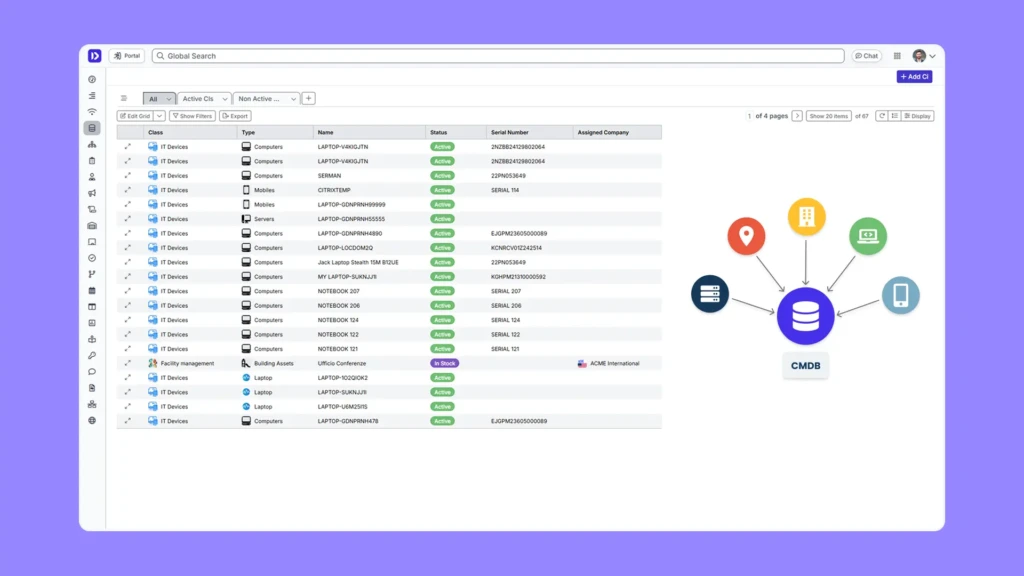
Deepser’s real strength lies in its ability to track any corporate asset, not just IT hardware. It can manage car fleets, facilities, and mobile devices, visualizing their relationships through the “Graph View.” This feature immediately highlights dependencies between hardware, software, people, and contracts.
Thanks to seamless integration with the Service Desk, every Configuration Item (CI) is “live.” It automatically links to tickets, problems, and changes to give technicians complete context. It is the ideal solution for organizations seeking total data control without the prohibitive costs and complexity of industry giants.
Key features:
- Flexible Modeling: Unlimited creation of custom CI classes and attributes without coding.
- Graphical Relational Map: Interactive visualization of dependencies for instant impact analysis.
- Native ITSM/ESM Integration: CMDB data is immediately accessible across all platform modules, including CRM, Service Catalog, and Password Manager.
- Versatile Data Populating: Bulk import via CSV and full REST API integrations to connect with any external system.
- Asset History: Detailed tracking of every change made to asset configurations.
2. ServiceNow
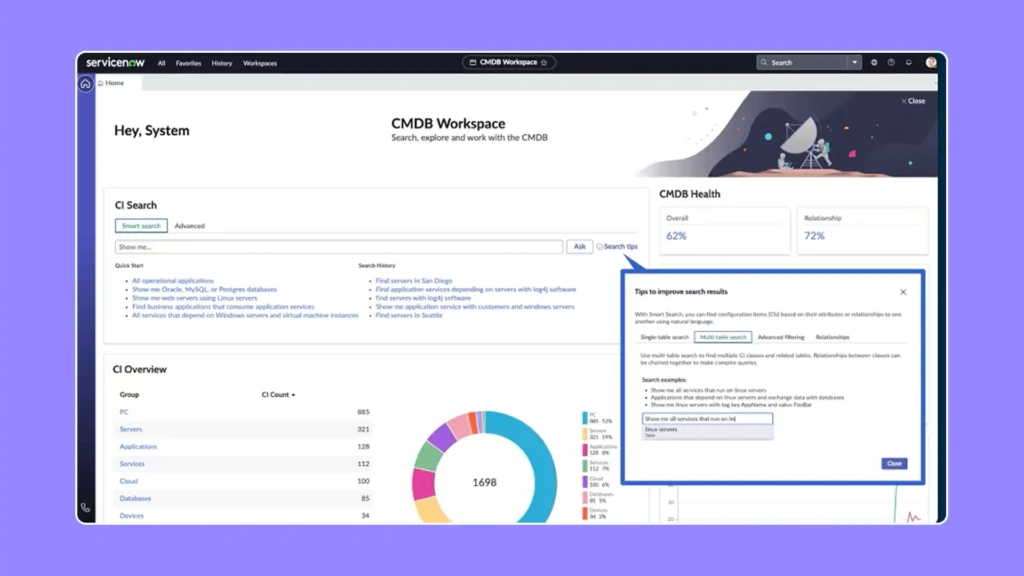
ServiceNow has long been the market standard for large enterprises.
Its CMDB acts as the core of the “Now Platform” and stands out for the power of its CSDM (Common Service Data Model), a standardized framework designed to connect IT operations with business strategy.
It is an incredibly customizable solution, though it requires dedicated teams and significant budgets for implementation and ongoing maintenance.
Key features:
- Service Mapping: Automated mapping of business services (a feature that often requires additional ITOM licenses).
- Event Management: Native correlation between monitoring events and impacted CIs.
- Enterprise scalability: An architecture designed to handle millions of CIs in complex and distributed environments.
- Service Graph Connectors: Certified connectors to import data from hundreds of external sources while maintaining data integrity.
3. Jira Service Management
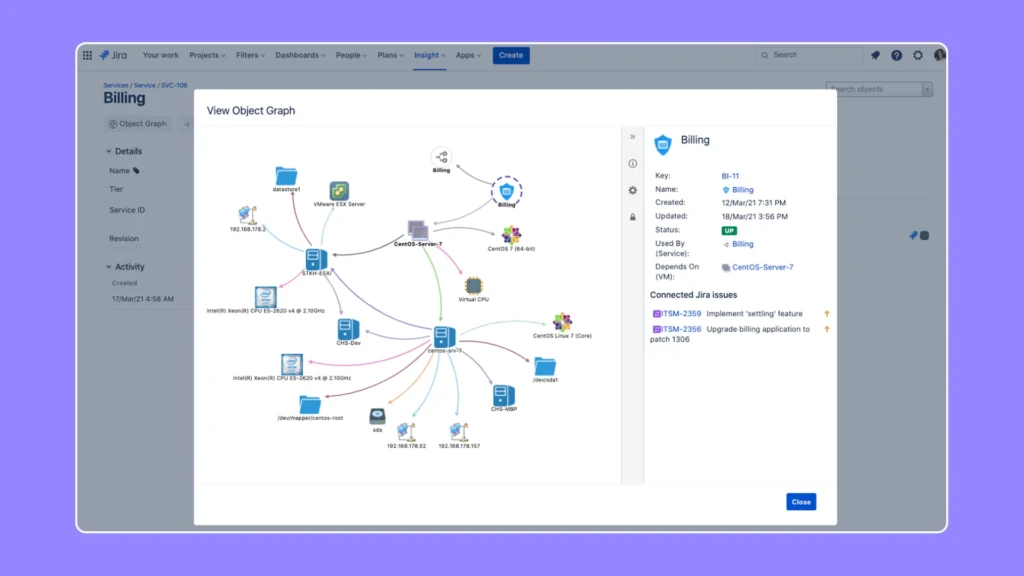
Formerly known as Insight, “Assets” is Atlassian’s native CMDB. It is the natural choice for teams working within the Jira ecosystem. It stands out as an open object database, capable of managing not only IT assets but also HR, legal, and facilities inventories.
Key features:
- “Open Object” Flexibility: The ability to map anything, not just IT assets. This includes employees, locations, and contracts.
- Jira Automation: Leverages Jira’s powerful automation engine to automatically update asset fields.
- DevOps Integration: A direct connection between development tickets, incidents, and impacted CIs.
4. Freshservice
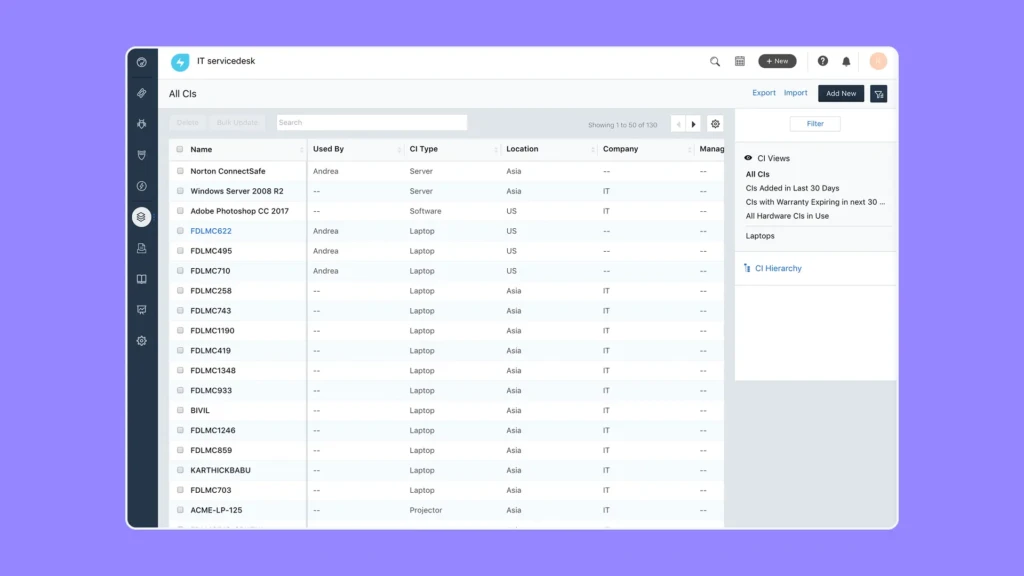
Freshservice prioritizes simplicity and rapid Time-to-Value. Its modern CMDB offers built-in automated discovery capabilities, making it ideal for organizations that need immediate visibility without months of configuration.
Key features:
- Integrated Discovery: Uses probes and lightweight agents to scan the network and populate the inventory.
- Asset Lifecycle Management: Comprehensive management of the entire lifecycle, from procurement to disposal.
- Dependency Maps: Clean visualization of upstream and downstream relationships.
- SaaS integration: Native management of software licenses and SaaS contracts.
5. Device42
Device42 is a specialized solution originally designed for Data Center Infrastructure Management (DCIM) that has evolved into a complete CMDB. It is unbeatable when it comes to agentless discovery and physical mapping, handling details like racks, power consumption, and cabling with precision.
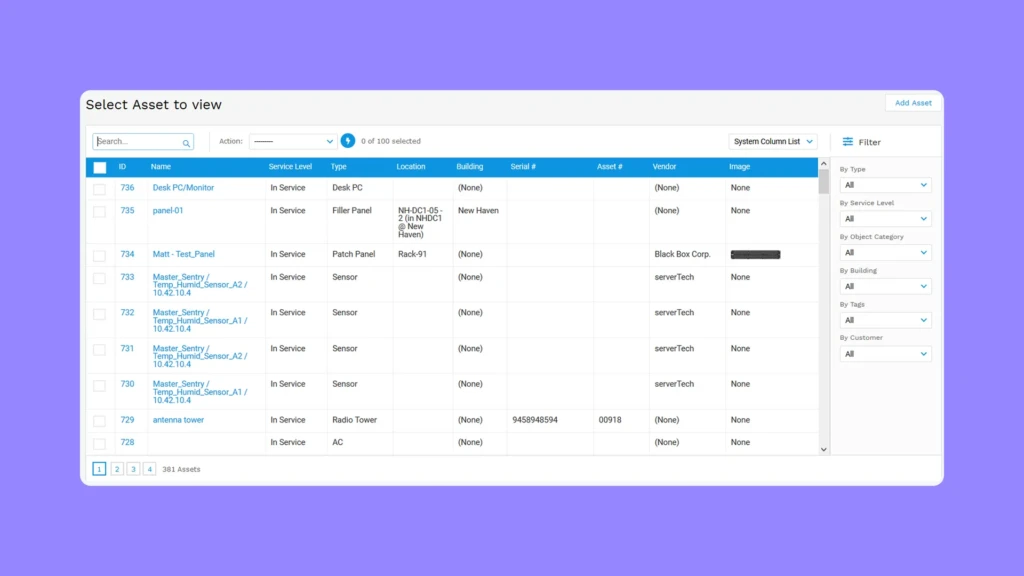
Key features:
- Agentless Discovery: Granular automated detection that does not require installing agents on target devices.
- Application Mapping: Automatic visualization of dependencies between applications and services.
- IP management (IPAM): A native module for IP address management fully integrated into the CMDB.
- Rack Visualization: Realistic diagrams of server cabinets and power distribution layouts.
6. BMC Helix CMDB
An industry veteran that has successfully reinvented itself. BMC Helix offers a “business-aware” CMDB with robust data federation capabilities. It is designed for complex organizations that need a “Single Source of Truth,” aggregating data from multiple disparate sources into a unified view.
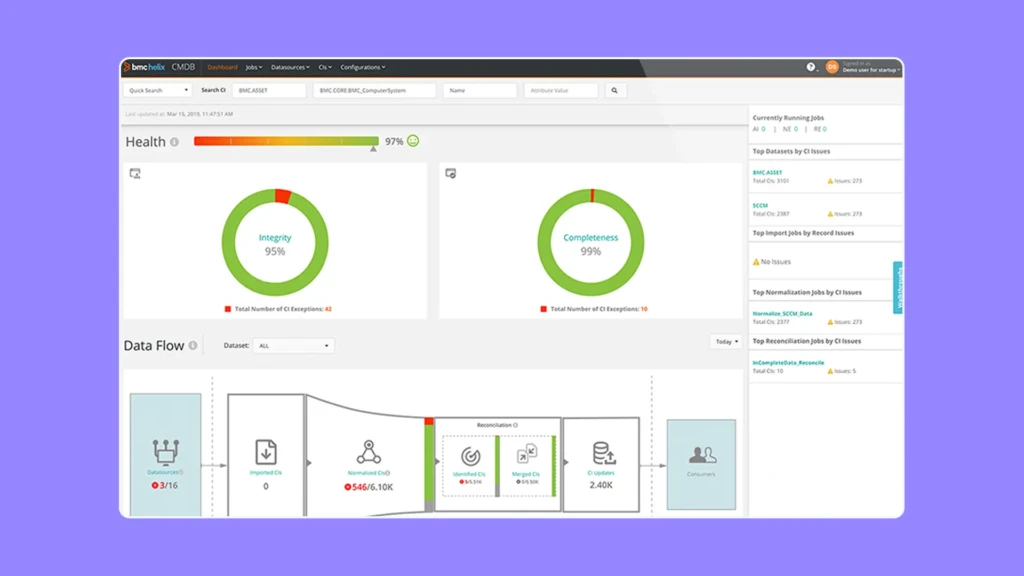
Key features:
- Data Federation: The ability to view data residing in external databases without physically duplicating it.
- Blueprint Templates (2026): New templates designed to accelerate the creation of service maps.
- AI Service Modeling: Leverages AI to automatically suggest relationships between infrastructure components.
7. SolarWinds
SolarWinds offers a pragmatic approach to CMDB, focusing on the integration between assets and the Service Desk. The solution’s strength lies in its ability to easily link assets to incidents, enabling the calculation of real Total Cost of Ownership (TCO) and risk.
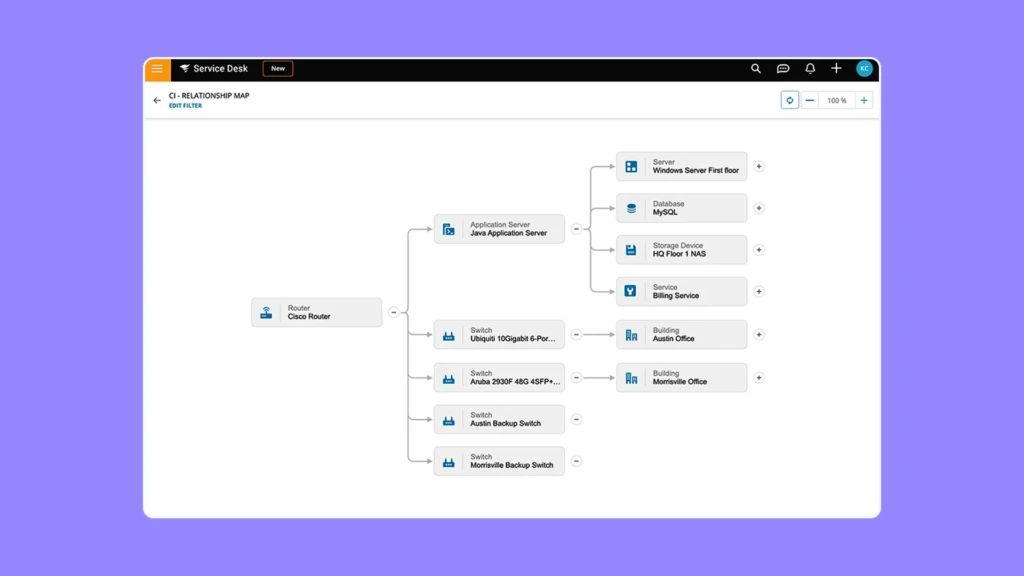
Key features:
- Risk Detection: Automatic analysis of risks associated with changes to specific CIs.
- Orion integration: Seamless synergy with the SolarWinds network monitoring suite.
- Audit History: Detailed tracking of every change made to asset configurations.
8. Faddom
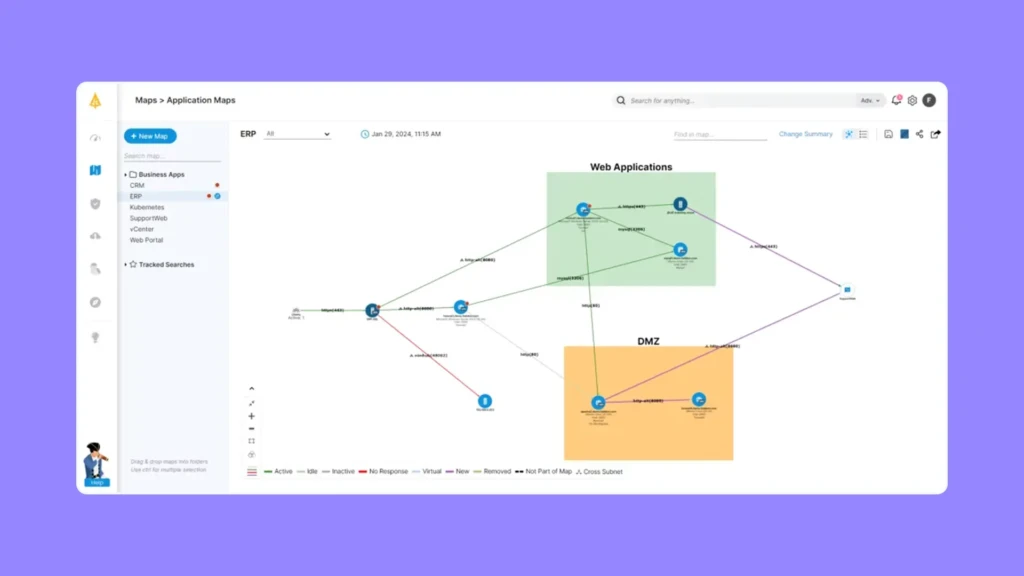
Faddom is an exceptional niche tool for Application Dependency Mapping. Unlike generalist CMDBs, it focuses on creating real-time visual maps of applications without agents, ensuring zero impact on performance.
Key features:
- Real-Time Mapping: Continuous updates to application maps based on live network traffic.
- Passive Discovery: It does not actively scan (ping/sweep) but listens to traffic, ensuring higher security.
- Simulation Migrations: Ideal for planning cloud migrations by understanding exactly which components need to move.
9. CloudAware
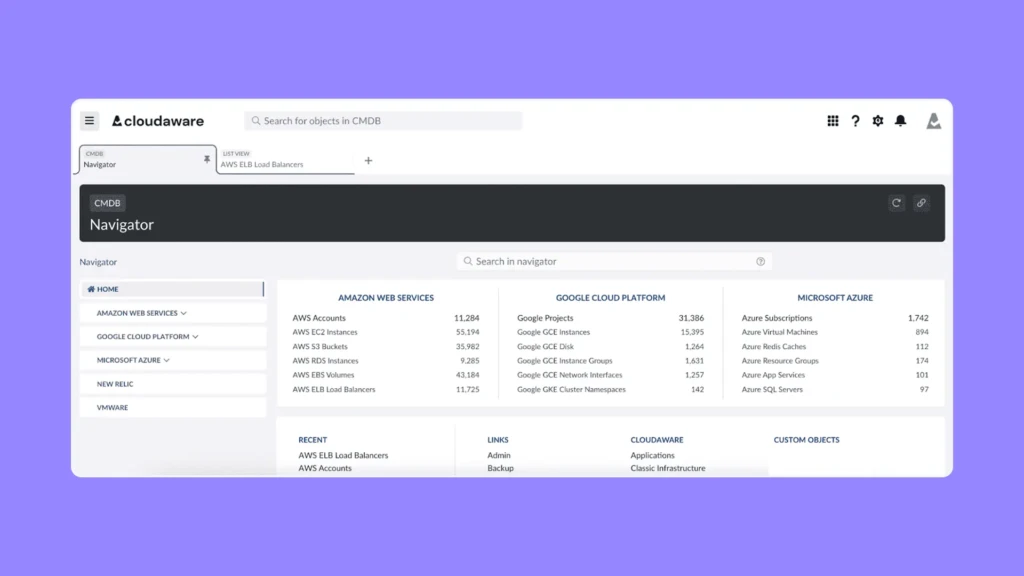
Designed for “Cloud-First” companies with complex multi-cloud architectures, CloudAware acts as a CMDB that unifies views across AWS, Azure, Google Cloud, and on-premise environments, with a strong focus on security (SecOps).
Key features:
- Unified Multi-Cloud: Normalizes data from different cloud providers into a single, consistent model.
- Compliance Checker: Continuously verifies asset compliance against security policies.
- Cloud Cost Management: Directly associates infrastructure costs with specific business services.
10. ManageEngine
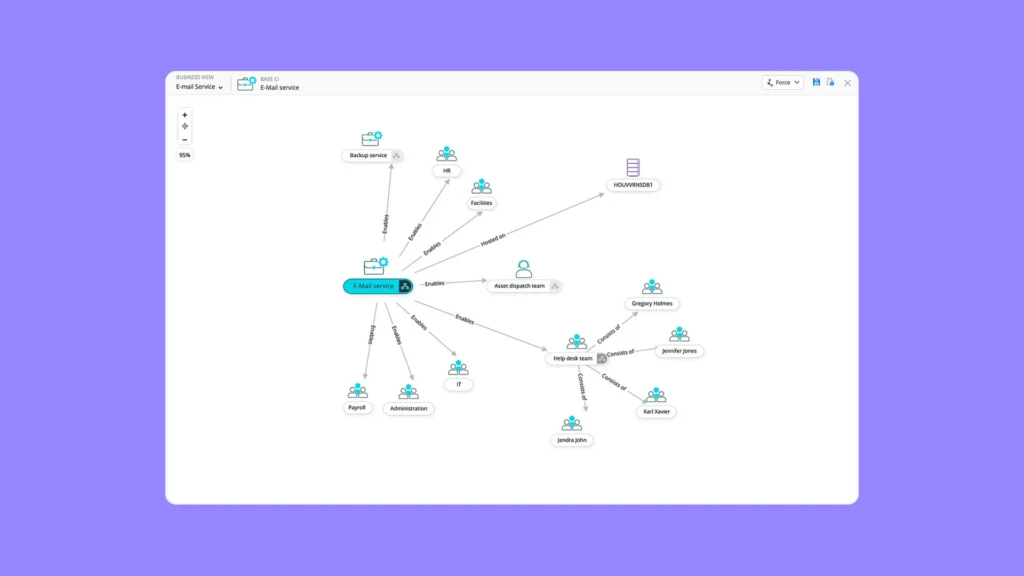
A balanced solution that offers excellent value for money. ManageEngine’s CMDB is integrated into its ITSM suite and provides visual tools for building custom business reports and views.
Key features:
- Business Views: The ability to group CIs into logical views for specific services (e.g., “Email Service”).
- Visual Relationship Builder: A drag-and-drop interface for mapping relationships.
- Distributed Scanning: A scalable architecture designed to scan geographically distributed networks.
11. GLPI
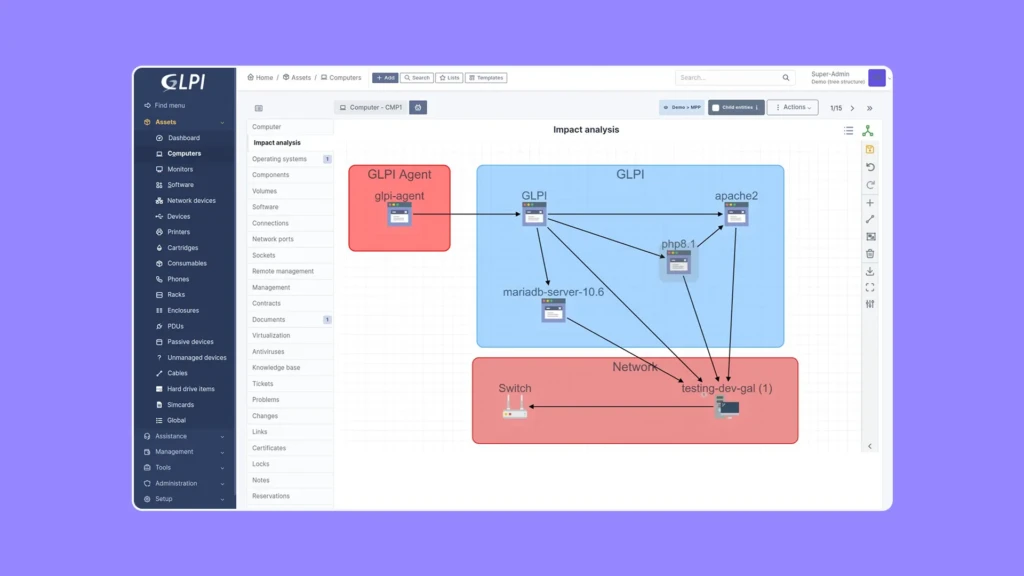
The definitive Open Source solution for ITSM. In its most recent version (v11+), GLPI has made significant strides, offering a robust, customizable CMDB with no license fees. It is ideal for organizations with the in-house expertise to manage configuration.
Key features:
- Open Source: Total code control and zero recurring licensing costs.
- Financial Management: Strong native capabilities for administrative management and asset depreciation.
- Multiplatform Agents: Inventory agents available for almost every existing operating system.
12. Ivanti
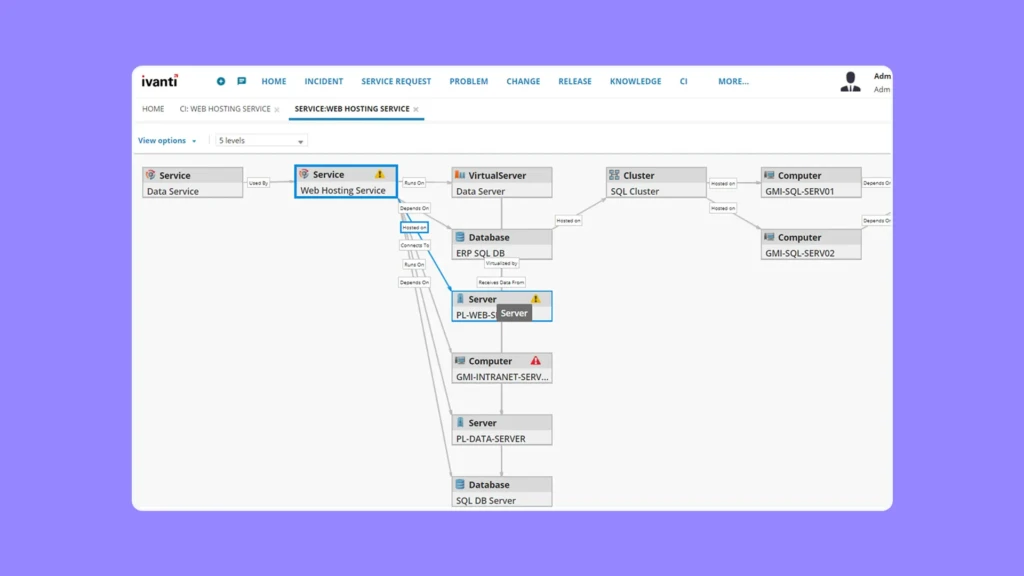
Ivanti focuses on automation and “Self-Healing IT.” Its CMDB (often enhanced by Ivanti Neurons for Discovery technology) is designed to maintain data accuracy by automatically correcting discrepancies.
Key features:
- Self-Healing: Automated bots that detect and fix configuration issues on endpoints.
- Unified Discovery: Combines active and passive discovery with cloud connectors.
- ServiceMapping (ViVID): Advanced integration for visualizing service impact.
Which CMDB to choose for your company?
After analyzing such diverse solutions, it is clear that no single “best” CMDB exists.
The right choice is simply the one that mirrors the specific complexity of your infrastructure and aligns with your organization’s goals without friction.
In 2026, the goal is not to buy the tool with the most features on paper, but to find the platform that truly integrates into your workflows, avoiding hidden costs and structural rigidity. The difference between a static database and a real governance tool lies in the ability to model data according to your needs, not the vendor’s.
Deepser gives you exactly that control. Start your 14-day free trial and build a real map of your infrastructure today.
Book a meeting>