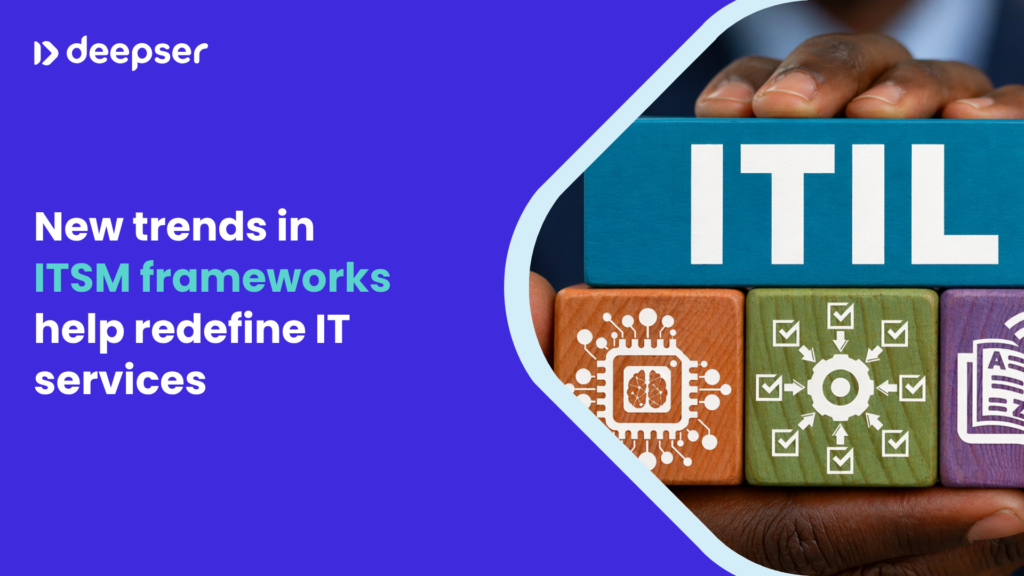
Anyone working in IT already knows ITIL and recognizes its role in service management. Originally developed in the United Kingdom within public sector initiatives focused on organizing IT services, the framework quickly expanded into private companies, providing a shared reference to coordinate work and clearly define what needs to be managed on a daily basis.
Early versions helped many organizations improve support quality and reduce inefficiencies, thanks to clearer processes and roles. With later updates, ITIL broadened its perspective and began linking IT services more directly to business goals, also incorporating user experience and perceived quality.
This shift has influenced how IT teams operate. Tasks are handled with greater precision, while service management takes on a more relevant role in business decisions. At the same time, increasing digitalization calls for a broader interpretation of the framework, one that can adapt to new operating models.
You might also be interested in:
5challenges in applying ITIL in companies

To interpret ITIL effectively in 2026, it helps to look at five key evolutions that are reshaping its role:
From service management to value management
One of the most important changes concerns how ITIL defines a service. In earlier versions, the focus was on executing activities correctly. More recent evolutions shift attention to the value a service delivers. This means evaluating a service based on how much it truly supports the business or its users. Simply resolving requests or maintaining stability is no longer enough, the outcome matters. As a result, IT teams increasingly connect their work to business-oriented metrics.
From reactive management to signal-based management
ITIL is moving from a request-driven logic to one guided by operational signals. In the past, many activities started from tickets or reports. Now, more organizations rely on system-generated data to understand what is happening. An unusual spike in usage, repeated behavior, or patterns in tickets can reveal an issue before it is even reported. This evolution enables a more proactive way of managing services and reduces reliance on manual reporting.
From operational automation to intelligent automation
Automation has always been part of ITIL, but its role is evolving. It is no longer limited to executing repetitive tasks. With the integration of artificial intelligence, automation now extends into decision-making stages. Systems can classify requests, suggest solutions, and support prioritization. This leads to faster and more accurate management, while IT teams focus on activities that require human judgment.
From technical quality to service experience
Another evolution concerns how quality is measured. In the past, the focus was on technical elements such as availability and response times. Now, user experience is also part of the equation. A service can meet all technical parameters and still be difficult to use. For this reason, ITIL increasingly aligns with a view where service perception becomes an integral part of evaluation. This also changes how IT teams design and improve services.
Following these evolutions means interpreting ITIL in a more up-to-date way. The principles remain the same, but their application requires tools that can support increasingly dynamic activities. As request volumes grow and services become more interconnected, maintaining visibility and control calls for a more advanced level of management.
With Deepser, ITIL is applied in daily operations without requiring forced adjustments. Every request follows a defined path, from intake to resolution, with fully traceable and easily accessible steps. Information remains consistently available and up to date, ensuring continuity even when multiple teams are involved.
Automation supports key moments in the workflow and reduces manual effort, while artificial intelligence helps interpret operational data and identify what needs attention. In this way, ITIL guidelines are not just theoretical, they become part of how services are managed every day. Try the free demo and discover how we can support your business.