
Meccanostampi introduced Deepser to bring user requests together in a single environment and gain a clearer view of the activities handled by the IT team. Later, the integration with baramundi, the Unified Endpoint Management solution already used by the company, showed the value of connecting Deepser to the tools in the IT ecosystem, bringing tickets, endpoints, and technical operations into the same flow.
The challenge
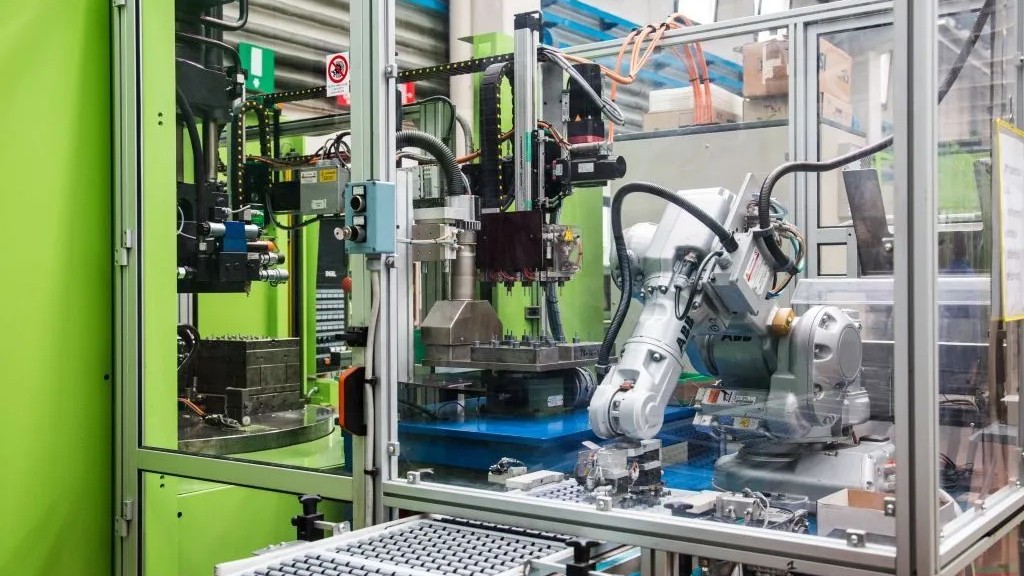
Meccanostampi operates in the manufacturing sector with four production plants, 260 employees, and a highly automated, interconnected production process. As the technological infrastructure grew, the number of devices and software to manage also increased, making it necessary for an IT team of three people to maintain a complete view of activities.
Before Deepser was introduced, user requests came in through different channels. A report could be made verbally, by email, by phone, or on Teams. This approach made it easier to lose information and harder to accurately reconstruct the work carried out by the IT department.
The need therefore concerned both day-to-day organization and traceability. Meccanostampi wanted to know which requests were being handled, set intervention priorities, and have data useful to the administrative area as well, to understand where the IT team’s time was spent and allocate the related costs.
At the same time, the growing number of company devices had brought up the need to automate their management. For this reason Meccanostampi had already adopted baramundi, a Unified Endpoint Management platform used to centrally manage endpoints, inventory, software, updates, and patching. Connecting this system to the support process therefore represented an important operational opportunity.
The solution
Deepser was introduced in 2019 as a single point to collect and manage user requests. Through the portal, the IT team can see all reports, set their urgency and priority, and organize the work based on the activities actually open.
Centralization also made collaboration within the department easier. At the start of the day the team has an overview of the issues to tackle and can distribute activities by priority. Users can also check whether a problem has already been reported, avoiding duplicate tickets.
Over time, Deepser was integrated with baramundi. Being able to make the platform communicate with a tool already used by Meccanostampi made it possible to combine request management with the information and activities on the endpoints.
Thanks to the integration, the IT team can associate the affected device with the ticket, view the information coming from baramundi within Deepser, and access the jobs linked to the endpoint. It can also quickly reach the relevant management screen and start certain operations directly from the ticket flow.
In this way, Deepser does not replace the tools already in place, but connects them to the Service Management process. The user’s report, the device involved, and the technical intervention thus remain within a connected flow, reducing manual steps between platforms.
With Deepser we finally brought all requests together in a single point, and in everyday work this has really helped us a lot. Today we have a much clearer view of what is happening, we can manage priorities better and immediately understand where to step in. Handling requests has also become faster and, above all, we no longer risk losing information along the way.
Andrea Barp, IT Systems Administrator, Meccanostampi
Results and impact
With Deepser, Meccanostampi has progressively consolidated a single method for managing IT requests. Since its introduction, more than 12,000 tickets have been handled, with a progressive growth in the use of the portal by users.
Having all requests available in a single environment has improved the traceability of activities and made it easier to set priorities and distribute the work. The data collected also makes it possible to analyze how many requests are handled, which areas require more interventions, and what the related resolution times are.
The integration with baramundi added a further level of automation and shows the advantage of being able to connect Deepser to the tools the customer already uses. The IT team can start from the ticket, immediately identify the device involved, and launch some operations without constantly switching from one platform to another.
A concrete example concerned a Microsoft Teams update issue affecting numerous PCs. Before the integration, the intervention required connecting to the user’s computer, running the update, and checking the result. Andrea, IT systems administrator at Meccanostampi, estimated a time of about 15 minutes for each intervention.
With Deepser and baramundi integrated, in the same case the process was reduced to about one minute. From the ticket it was possible to assign the job, check its outcome, and close the request without separately opening the baramundi console. On an issue that involved numerous devices, being able to make the two platforms work together generated significant time savings for the IT team.
About Meccanostampi
Founded in 1965 and based in Limana, in the province of Belluno, Meccanostampi specializes in the design and construction of molds and in the production of molded components in technopolymers. The company has four production plants, 25,000 square meters of covered space, 140 injection presses, and 260 employees. The process includes co-design, mold design and construction, injection molding, assembly, finishing, quality control, and international logistics for customers in various industrial sectors.