Artificial intelligence is entering a growing number of business processes, but not all activities require the same capabilities. A simple support request, for example, can be handled quickly, while the analysis of a technical problem might require much deeper processing. Always using the same language model therefore risks consuming more resources than necessary.
This need is where AI Model Routing comes from, a technique that directs each request to the AI model best suited to its characteristics.
With the growing availability of Large Language Models (LLMs), companies have access to technologies with very different levels of performance. The real challenge is understanding how to leverage these differences to improve how processes work and to use resources more intelligently.
You might also be interested in:
AI Hype: How to recognize features that are not really Artificial Intelligence

Not every activity needs the same AI model
Each language model has characteristics that make it better suited to certain activities. Some offer advanced reasoning capabilities, while others prioritize speed and require fewer resources to produce an answer. A particularly sophisticated model can be useful when complex information needs to be interpreted. For simple and repetitive tasks, instead, a lighter solution could deliver adequate results at a lower cost.
Think of a Service Desk that receives hundreds of requests every day. Recognizing the category of a ticket can require relatively simple processing. Analyzing the history of incidents to suggest a possible solution, instead, might require higher reasoning capabilities. Assigning both tasks to the same model means giving up the chance to optimize resources according to need.
How AI Model Routing works
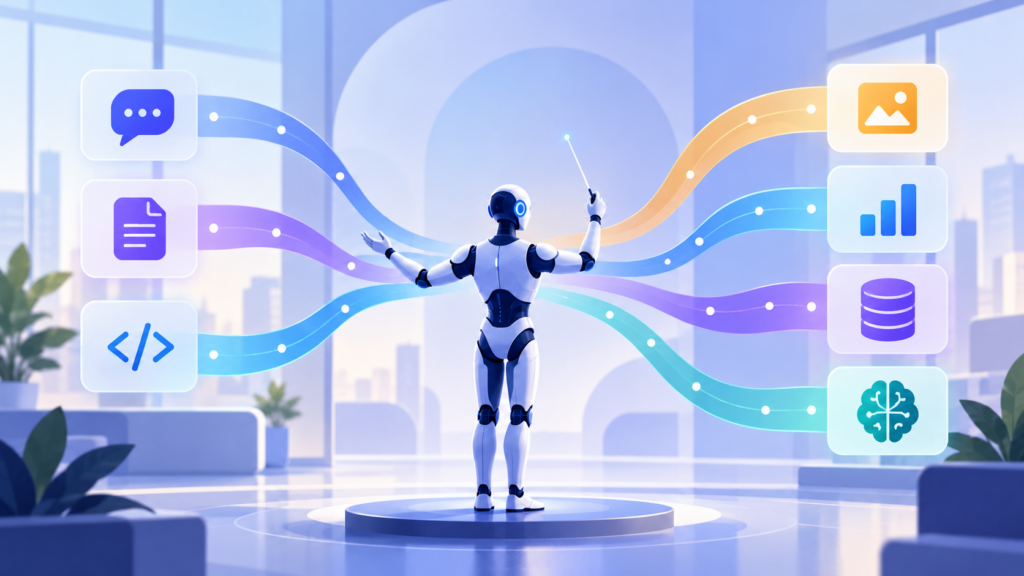
AI Model Routing works through a routing system that evaluates the characteristics of a request before sending it to the selected model. The choice can follow rules defined in advance or be entrusted to an intelligent mechanism able to recognize the type of activity to carry out. A simple request is therefore directed to a fast and less expensive model. When the work requires more advanced processing, instead, the system can use a model with higher capabilities.
This mechanism also makes it possible to plan alternative paths. If a model is not available, the request can be directed to another compatible solution, avoiding any interruption to the process. The goal is to use the available capabilities in proportion to the work to be done, while maintaining the required level of quality.
The cost of artificial intelligence also depends on technological choices
When artificial intelligence is used occasionally, the cost difference between two models can seem negligible. The situation changes when thousands of requests are processed every day. Many LLM-based services charge based on the volume of tokens used. Rates can vary significantly from one model to another, affecting the company’s overall spending.
Using a particularly expensive model even for basic tasks can therefore weigh on the budget without offering proportionate benefits. AI Model Routing makes it possible to distribute the workload across different models and reserve the more advanced ones for the tasks that really need them. The saving, however, must be assessed by also considering the quality of the results. An inexpensive model that requires frequent corrections could generate overall costs higher than expected.
Response speed influences the user experience
The time needed to obtain an answer becomes particularly important when artificial intelligence interacts directly with people. A corporate chatbot answering a frequently asked question must be able to provide information quickly. A system that analyzes a complex technical request, instead, may need more time to produce a reliable answer.
AI Model Routing makes it possible to take this difference into account and select the model based on the activity, avoiding unnecessarily long processing. In Service Management, this aspect can directly influence the experience of those who use a support portal or interact with an AI agent while opening a request.
The freedom to choose reduces dependence on a single model
The artificial intelligence market evolves rapidly. New models are released frequently and those already available receive updates that can change their performance. For a company that has built all of its processes around a single model, every change can require new technical assessments.
Having an architecture capable of integrating different models offers greater freedom in choosing which technologies to use. It also makes it possible to adapt to market developments without having to completely rethink existing processes. This flexibility is important in the management of corporate information as well. Some data requires particular processing conditions and cannot be freely shared with external services. A properly configured routing system can respect these needs, routing requests only to authorized models.
The future of enterprise AI depends on choosing the right model
The evolution of LLMs is broadening the ways artificial intelligence can be used in business processes. At the same time, it makes it increasingly important to assess which technologies to employ for each activity. AI Model Routing makes it possible to approach this choice dynamically, adapting the capabilities of the models to operational needs and improving the use of available resources. For companies, it means being able to develop more flexible AI applications and support their evolution without necessarily depending on a single provider.
Deepser follows this direction thanks to the support of several language models within its own platform. Companies thus have the freedom to choose the AI technologies best suited to their needs and integrate them directly into Service Management processes. Discover how we turn this flexibility into an advantage for your company, reducing costs and getting the most out of every investment in AI. Request a free demo.