
Back
Back
Back
Blog

How to Set Up SLAs in Your ITSM Software

In this article

How to Set Up SLAs in Your ITSM Software

September 25, 2024

·

6 min read

Anna Acquasaliente

Anna Acquasaliente

SLAs ITSM Software

Have you ever felt like you are constantly playing catch-up with IT requests? Do your users get frustrated because they are unsure when their problems will be fixed? There is a way to ensure you are delivering on your promises and keeping everyone happy: Service Level Agreements (SLAs). 

Think of an SLA as a formal agreement between you (the IT service provider) and your users (the customers). It clearly outlines what IT services will be provided, how quickly issues will be resolved, and how performance will be measured. Setting up SLAs in your ITSM software allows you to streamline your processes, improve communication, and build trust with your users. 

WHY ARE SERVICE LEVEL AGREEMENTS IMPORTANT IN ITSM?

SLAs benefit everyone involved.

For Service Providers (You): 

  • SLAs help you manage expectations and workload. You can prioritize tasks based on urgency and ensure you are meeting the most critical needs first. 
  • They also provide a clear benchmark for measuring your performance. This allows you to identify areas for improvement and continuously enhance your IT service delivery. 

For Customers (Your Users):

  • SLAs give users peace of mind. They know exactly what level of service to expect and how long it should take to resolve issues. For Customers (Your Users): 
  • This transparency fosters trust and a more positive working relationship between IT and the rest of the organization. 

WHAT MAKES UP A STRONG SERVICE LEVEL AGREEMENT?

Let us delve into the anatomy of an SLA. At its core, an SLA comprises several essential elements: 

  1. Service Scope: This defines the scope of the agreement, outlining what services are included and any limitations or exclusions. 
  2. Performance Metrics are measurable criteria used to assess service performance. Common metrics include response time, resolution time, uptime percentage, and customer satisfaction scores. 
  3. Responsibilities: Delineating the roles and responsibilities of the service provider and the customer ensures accountability and transparency. 
  4. Penalties: When service levels are not met, SLAs often include provisions for penalties or remedies. These serve as incentives for compliance and compensation for breaches. 
  5. Reporting: Regular reporting on SLA performance is essential for tracking progress, identifying trends, and making informed decisions for improvement. 

SETTING UP WINNING SERVICE LEVEL AGREEMENTS IN YOUR ITSM SOFTWARE
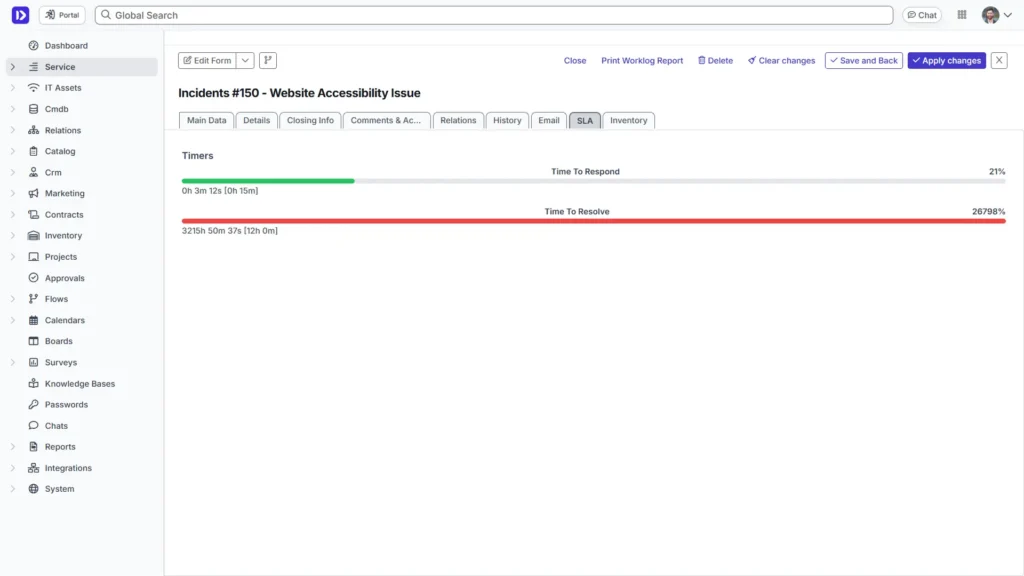
Service Level Agreements Request Interface in Deepser

Now that you understand the importance of SLAs let us dive into how to create and manage them within your ITSM software. 

STEP 1: IDENTIFYING SERVICE REQUIREMENTS

Before diving into the nitty-gritty of SLA creation, it is crucial to understand your organization’s services and customers’ needs deeply. Conduct thorough assessments and consultations to identify service requirements, pain points, and priorities. This lays the foundation for crafting SLAs aligned with your business objectives and customer expectations. 

STEP 2: DEFINE YOUR SERVICE LEVEL AGREEMENTS

What are your goals for IT service delivery based on your user needs? Do you want to focus on faster response times, improved resolution rates, or a combination? 

STEP 3: CHOOSE THE RIGHT METRICS AND KPIs

Metrics are the backbone of any SLA, providing quantifiable measures of performance. When selecting metrics, it is essential to choose indicators that are relevant, meaningful, and aligned with your objectives.  

Companies commonly use Key Performance Indicators (KPIs) such as First Response Time (FRT), Mean Time to Resolve (MTTR), and Service Availability to gauge service performance. Additionally, consider incorporating customer satisfaction surveys to capture the qualitative aspect of service delivery. 

STEP 4: HARNESS THE POWER OF YOUR ITSM TOOL

Most ITSM software offers built-in Service Level Agreements functionalities. Here are some key features to look for: 

  • SLA Templates: Save time by creating pre-defined templates for different service categories. 
  • Customization Options: Tailor SLA parameters to meet the specific needs of each service. 
  • Integration with Service Catalogs: Link your SLAs to specific service offerings in your catalog for a seamless user experience. 

STEP 5: MANAGEMENT MAKES THE DIFFERENCE

Once your Service Level Agreements are set up, effective management is crucial. Here is how to ensure success: 

  • Assign Ownership: Clearly define who is responsible for monitoring and reporting on SLA performance within your team. 
  • Monitor and Track: Use your ITSM software’s reporting tools to stay on top of your SLA compliance. 
  • Regular Reviews: Schedule regular reviews to assess how well your SLAs are working. Update them as needed to reflect changing user needs or service offerings. 

KEEPING AND EYE ON YOUR SERVICE LEVEL AGREEMENTS: MONITORING AND REPORTING
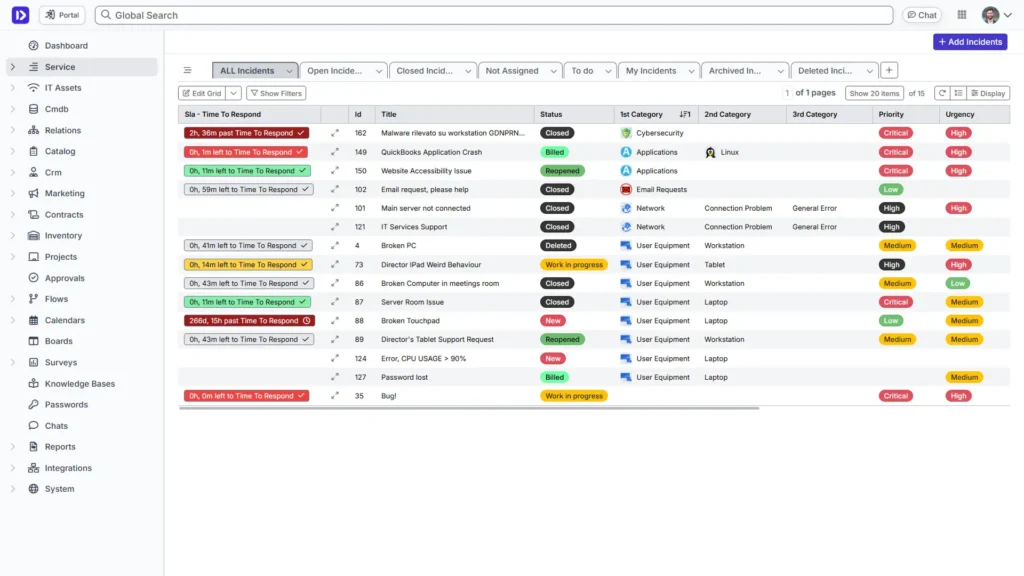
Service Level Agreements Interface in Deepser

Real-time monitoring tools in your ITSM software allow you to track your SLA performance proactively. Automated alerts and notifications can flag potential breaches, allowing you to take immediate action. Additionally, generating comprehensive SLA reports provides valuable insights for future improvement. 

WHAT HAPPENS WHEN A SLA IS BREACHED?

Don’t panic! Focus on understanding the root cause of the breach. Investigate the incident and identify what went wrong. Once you understand the cause, you can implement corrective actions to prevent similar issues in the future. This could involve improving staff training, adjusting resource allocation, or even revising your SLAs to better reflect your current capabilities. 

THE KEYS TO UNLOCKING SUCCESSFUL SERVICE LEVEL AGREEMENT MANAGEMENT

Here are some best practices to take your SLA game to the next level: 

  • Align with Business Goals: Ensure your SLAs directly support your organization’s overall objectives. For example, if uptime for a critical sales application is paramount, your SLA for that service should reflect a higher priority for rapid resolution. 
  • Embrace Continuous Improvement: Don’t settle for the status quo. Regularly review and refine your SLAs based on performance data and user feedback. This fosters a culture of continuous improvement within your IT service delivery. 
  • The Power of Automation and AI: Leverage cutting-edge technology to streamline SLA management. Automated workflows can handle routine tasks, freeing up your team to focus on more complex issues. Additionally, AI-powered tools can analyze vast amounts of data to identify trends and predict potential SLA breaches before they happen. 
  • Invest in Training and Education: Empower your team with the knowledge and skills they need to effectively manage SLAs. Train them on SLA processes, reporting tools, and best practices for maintaining compliance. 

CONCLUSION 
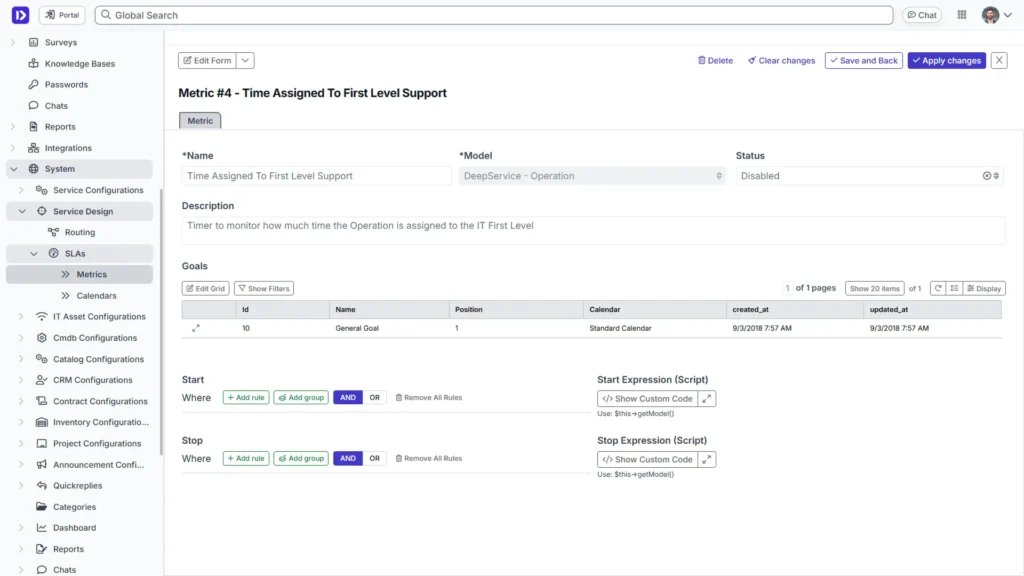
Service Level Agreements Setup Interface in Deepser

Service Level Agreements (SLAs) are not just contractual documents; they are strategic tools that play a pivotal role in the success of any organization. Whether you are a small startup or a multinational corporation, effectively managing SLAs is crucial for maintaining customer satisfaction, driving operational efficiency, and achieving business objectives. 

With Deepser’s SLA module, you have the power to streamline and automate the management of your SLAs, ensuring that service levels are consistently met and exceeded. By leveraging Deepser’s robust features and capabilities, you can efficiently create, monitor, and report on SLAs, all within a single, integrated platform. 

Try our free demo

Subscribe to our newsletter

Get the best content on ITSM software, customer service and processes in your inbox twice a month.

Summarize this article with AI

Access the recording

See Deepser in action

Work with us

Access the Resource

Complete the form to get immediate access.

Compare all features
Feature
Starter
Plus
Enterprise
Service & Ticketing
Service Management
Incident Management
Issue Management
Request Management
Problem Management
Change Management
Customizable Service Types
Help Desk
Manage Priority/Urgency
Manage Status
Multi-Level Customizable Categorization
Routing Rules
Request Assignment
Customizable Service Desk Queues
Reminders
Escalation Rules
Multichannel Communication
Email Ticketing
Unlimited Email Integrations
Automatic Email Notifications
Customizable Email Templates
Call Center Management
CTI Integration
Time Tracking
Worklog Activities & Reports
Internal Comments
Comments To Users
Pre-Defined Quick Replies And Macros/Templated Responses
Ticket Relationship Mapping
Custom Ticket Templates
Multiple Ticket Templates & Template Rules
Ticket Export
Task Automation
To Do List
Tasks For Maintenance Scheduling And Activity Planning
Visual Calendar And Progress
Split Activities To Multiple Users
Customizable Task Types
Customizable Task Templates And Fields
SLA
Multiple Service Level Agreements Policies
Custom Work Calendars
Custom Unlimited Metrics
Custom Unlimited Goals
Business Rules Management
Reminders And Notifications
Escalations For Sla Violation
Escalations To Prevent Sla Violation
Marketing
Conversions Management
Ads Campaigns Management
UTM Parameteres Tracking
Performance Monitoring
Advanced Collaboration
Changes Tracking
Sales
Catalog: Product Management
Catalog: Simple Products & Grouped Products
Catalog: Product Types and Visibility
Catalog: Related Products
Tax Management
Tax based on Country
Multiple taxes
Currency: Multiple Currency
Currency: Automatic Currency Rate Updates
Currency: Quotes & Orders with different currencies
Price List: Multiple Price List Management
Price List: Catalog Price List Rules & Priorities
Price Lists based on Account
Quotation Management
Quotation templates
Order Management
Order templates
Create Orders from Quotations
Invoice Management
Invoice templates
Create Invoice from Orders
Create Invoice from Tickets
Create Invoice from Products
Shipment Management
Shipment templates
Create Shipment from Orders
Calendar
Visual Calendars
Customizable Calendars Linked To Service, Cmdb, Crm, Tasks, Etc.
Integration with Microsoft 365 & Google Calendars
ITAM
IT Asset Manager With Auto-Discovery
Asset Lifecycle Management
Job Rules To Automatically Assign Assets To Companies/Users
Remote Collectors For Segregated Networks
Windows Agent
Agentless Discovery With Multiple Protocols
Monitoring
Software Manager: Auto-Detect Of Installed Software
Ip Address Manager With Subnets Auto-Discovery
Remote Control With Teamviewer
Remote Control With Anydesk
Remote Control With Splashtop
Integrations
Unlimited Ldap Integrations
LDAP Compliance With All Commercial Standards (Active Directory, Open Ldap, Etc.)
Import Users From LDAP
Import Groups From LDAP
Azure AD
SAML & OAuth2.0
SSO – Single Sign On
SSO Linked With Ldap Integration
Import – Powerful Native Tool
Import – Unlimited Customizable Imports
Export – Excel/Csv/Pdf Exports
Integration – Connector For External Integrations
API – Powerful Rest API
Open Source Library For Api Integration
Telephone Switchboards Via CTI
Dashboard
Real Time Html5 Dashboards
Dashboards Panels With Group Permissions
Unlimited Customizable Dashboards
Reports
Pre-Defined Reports
Unlimited Customizable Reports
Scheduled Email Reports
Grids
Massive Actions For Multiple Updates
Excel/Csv Export
Granular Visibility Permissions
Miscellaneous
Watchers Users
Multicompany
Multidepartment
Supervisor Users
Global Search On All Entities
Unlimited Custom Fields
Customizable Branding
Custom Fields For Every Entity: Ticket, Crm, Cmdb, Users, Companies, Itam, Etc.
Customizable Form Templates
Granular Visibility For Every Template Field
Customizable Template Rules
Custom Grids
Custom Grids: Easy Configuration With Drag&Drop Tool
Custom Events For Integrations Or Custom Processes
Multifactor Authentication
Multi Language
Flexible And Powerful Permission Management
Flexible User Groups
Customizable User Roles
System Lists With Advanced Permissions And Logic
Unlimited Customizable Lists With Advanced Permissions And Logic
Attachments For Document Storage
Unlimited Attachments With Drag&Drop Management
Attachment Types With Advanced Permissions For Visibility
Multiple Warehouse Management
Warehouse Loads and Unload
Warehouse: Tickets and Worklog integration
Portals
End User Portal
Self-Service Portal
User Registration With Customizable Signup Process
Guest Portal For Non-Registered Users
Cmdb Portal For End Users / Customers
Crm Portal For End Users/Customers
Cms For Guest Portal
Announcement: Type management
Announcement: ITSM Release Management
Announcement: Scheduling
Announcement: Visibility management & permissions
Announcement: Tag categorization and custom sorting
Announcement: Integration with Portal Designer
Chat
Internal Conversations
Internal Conversation Channels
End User Portal Chat
Conversation Channels With Multiple End Users / Customers
Web Widget
Branded Widget Published On Multiple Web Sites
Customization Of The Widget
Customizable Offline Module
Unlimited Simultaneous Chats
File Sending
Activity Hours
Board
Kanban With Entities Integration
Kanban With Free Forms
Contract
Integrated Worklogs
Purchase Orders Management
Suppliers Management
Contracts In Hours & Quantity
Contracts Workflows
CRM
Account Management (Customers, Providers, Suppliers, Partners, Etc.)
Contact Management (Leads, Prospects, Contacts, Etc.)
Opportunity Management
Customizable Opportunity Types
Linked With Service Management And Contracts
Sales Pipeline Management
Email Crm For Sales Opportunities And Contracts
Address management: Address type management (e.g. location address, billing, shipping, etc.)
Address management: Address association to Accounts, Offices, Warehouses and CMDB
Password Manager
Secure Password Manager With Double Key Encryption
Secure Password Manager Portal For End Users / Customers
Secure Password Manager With Corporate (Shared) Passwords
Secure Password Manager With Private Passwords
Audit Log For Passwords Security
Passwords Linked To All Entities Of The System
Password Manager: Automatic Generation
Password Manager: Strength Checker
Knowledge Base
Multiple Knowledge Bases
Kbs Visibility Based On Groups
Portal Kbs For End Users / Customers
Public Kbs For Non-Logged Users
Kb Linked To Tickets
Kb Linked To Cmdb / Itam
Kb Linked To Crm
CMDB
Unlimited Customizable Ci Object Types
Unlimited Cis
Relations Between Cis
Link With Tickets
Link With Crm And Contracts
Service Catalog Management
Contract Management
License Management
Locations
Link With Itam (Autodiscovery) Module
Planned Activities / Maintenance
Email Cmdb For Devices And Contracts
Graph view relations
Graph view layout & dynamic loading
Module Creator
Create Apps & Custom Modules
Create Custom Forms & Grids
Create End User Portal Custom Modules
Create Custom API
Survey
Customer Satisfaction Survey
Survey Form Visual Designer
Automatic Surveys
Realtime Dashboards
Periodic surveys
Project
Project Management
Auto-scheduling for tasks
Advanced Permissions
Project dependencies and constraints
Project milestones and deliverables
Flow
Approval Request Management
Management Of Approvals By Email
Management Of Approvals From User Portal
Approval Rules Management
Approval Stage Management
Management Of Scheduled Flows
Management Of Automatic Entity Creation
Management Of Automatic Entity Update
Scheduled Maintenance Management
Task Automation Management
Automatic Email Management
No Code / Low Code Platform
Portal Designer
Visual Portal Designer
Frontend Portal Visual Designer
Graphic Widget
Portal Page Management
Group Based Visibility Management
Graphic Widget Customization
Multiple Portals Management
Product Management
Development Task Prioritization
Bug and Fix Tracking
Product Issue Management
Product Backlog Management
Feature Requests Management
Changes Tracking
Task Assignment to Developers

How many agents are on your team?