Every day, in any company, someone solves a problem that someone else had already solved. I could easily recall several examples off the top of my head, from the simplest cases, like a technician spending an hour figuring out why a printer won’t connect to the network, to more complicated ones, like a colleague in administration who ends up rebuilding a procedure from scratch without knowing it had already been dealt with the year before. Does this mean these professionals are doing a bad job? Not necessarily, everyone wants to solve the problems in front of them. But unfortunately it means they are working without memory.
We’re used to considering as company assets the things we can count, like assets, licenses, or infrastructure. We rarely think that what our people know how to do is one too. And yet, when an experienced colleague changes role or leaves the company, we immediately realize how valuable what they carried with them was, and how little of it we had preserved.
Another aspect to consider in these situations is the waste of time, which can represent a significant loss for a company, even if it doesn’t appear on any balance sheet. According to research conducted this year by Stack Overflow, as many as three out of four professionals spend at least five hours a week searching for the information they need to do their jobs. Just think, more than half a working day spent solely on looking for information! A figure that clearly shows how the way a team organizes and shares its knowledge deserves greater attention from those who lead the company.
You may also be interested in:
Knowledge is an asset that must be managed
In IT Service Management this topic is even more evident, because every request is an opportunity to learn something about the organization. When the resolution of an incident becomes an article, that knowledge stops depending on a single person and the next technician can solve the problem faster.
But how do we make all this possible?
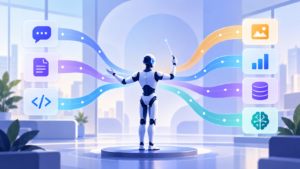
The ideal is to have a single space that lets people collect solutions directly during their daily work, catalog them simply, and find them again when needed. This is precisely the role of a Knowledge Base, which also makes it easier to recognize recurring problems, instead of leaving them hidden among dozens of similar tickets. And now that artificial intelligence is increasingly part of our daily work, we’ve seen how important it is to have well-organized company knowledge available. Even AI, in fact, can suggest good solutions only if the company has collected and curated what it has already learned.
I have always considered knowledge one of the most valuable intangible assets a company can have. But what really made the difference for me was understanding how important it is to give the people on my team the tools to share what they know and preserve it in a Knowledge Base. Because we must never forget that it is also thanks to what we learned yesterday that we can do better tomorrow.

Deepser is the only 100% Italian Service Management platform, trusted by more than 350,000 active users and designed to optimize business processes across the organization. Try our free demo and discover how we can support your company.