One of the most important lessons (and also one of the least immediate to accept) that I’ve learned after years of working in the tech industry is that, however much we may believe in our product, we will never be the only ones able to meet all our customers’ needs. And that’s perfectly fine. Every company brings with it far more than a list of problems to solve. There are years of work, investments already made, processes that work, and tools that have earned, over time, a specific role in its operations. It might be a management platform, a CRM, an ERP, or even an in-house solution that there would be no reason to replace.
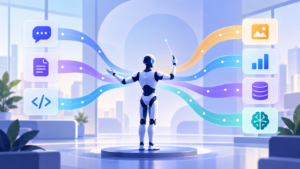
It’s impossible to be the only solution a company needs, and there’s nothing wrong with admitting it. On the contrary, it’s precisely this awareness that lets us grasp how important it is to invest in something that can truly make the difference: integration.
Unfortunately, in the tech industry there is still the temptation to build ecosystems in which everything has to begin and end within the same platform. And I know very well that, from the standpoint of those who develop a product, this is understandable, because having control of the entire environment makes many things simpler. But it’s worth asking who really benefits from that simplicity. And the answer, very often, is not the customer. And that is precisely the real problem.
We live in a context where, according to MuleSoft’s 2026 Connectivity Benchmark Report, organizations today manage an average of 957 applications, while only 27% are actually integrated. This figure makes clear how getting all these tools to work together is one of the most important challenges to tackle, and how urgent it is that the major players in the industry start to recognize the value of what exists beyond their own platform.
You may also be interested in:
The CEO Perspective – Digital sovereignty for European companies starts with the freedom to choose
Integrating means valuing what already works
In Service Management this principle matters even more, because services continuously cross different systems and departments. When a customer asks us whether Deepser can talk to SAP, Microsoft Dynamics 365, Salesforce, or another tool they use every day, that question says a great deal about their reality. It is telling us that they want to improve while keeping what already works and still holds value in their company. And it’s a request I consider more than legitimate and that, for exactly this reason, remains a priority in the evolution of our platform.
No business truly grows by isolating itself from everything around it, and this is the reflection I’d like to leave you with today. Perhaps integration, even before being a feature, is a form of humility applied to technology. And accepting that value grows when we know how to complete what others do well is, at times, the best way to go even further.

Deepser is the only 100% Italian Service Management platform, trusted by more than 350,000 active users and designed to optimize business processes across the organization. Try our free demo and discover how we can support your company.