
Back
Back
Back
Blog

IT Services: What They Are and Why They Are Important to Your Business

In this article

IT Services: What They Are and Why They Are Important to Your Business

March 14, 2025

·

7 min read

Anna Acquasaliente

Anna Acquasaliente

IT Services Illustration

What are IT services?

IT Services: include all the activities, resources and technology solutions that support a company’s processes and goals.

Digital transformation is proceeding at a rapid pace, and being able to effectively manage your IT infrastructure can make all the difference. This is when IT Services comes into play, offering tailored solutions to streamline business processes, lighten team workloads and ensure security and business continuity.

IT Services include:

  • Infrastructure (servers, network, hardware devices)
  • Software (cloud applications, custom programs)
  • Information security (data protection, firewall, antivirus)
  • Technical support (service and maintenance)

The main purpose is to provide value and simplify daily work, reducing costs and risks related to the inefficient use of technology.

Why IT Services Are Important for Businesses

Benefits of properly implementing IT Services include:

  1. Cost reduction: No need to purchase expensive infrastructure or hire specialized figures for each function. With pay-per-use or subscription models, you pay only for the resources you actually use.
  2. Scalability: Cloud-based services allow capacity to be increased or decreased according to the needs of the moment. This elasticity ensures that the IT structure is always adapted to work volumes.
  3. BusinessContinuity: Business Continuity and Disaster Recovery procedures ensure that, in the event of a breakdown or incident, the company can resume operations as quickly as possible, avoiding lengthy interruptions.
  4. Constant updates: As technology continues to evolve, externally managed IT services are responsible for keeping systems up-to-date, preventing obsolescence of resources.
  5. Focus on innovation: By freeing the internal IT department from repetitive and maintenance tasks, energy and expertise can be focused on product innovation and digital transformation.

Whatever the industry, technology is increasingly central to growth strategies. Relying on vendors or in-house IT Services solutions brings with it several opportunities:

What IT Services Are Most Wanted by Businesses

Not all companies have the same needs, but there are certain services that are more in demand due to their direct impact on operations and security:

Cloud Services

  • Cloud Computing: solutions for processing and storing huge amounts of data without having to maintain local servers.
  • SaaS (Software as a Service): applications usable via the Internet for managing business activities (accounting, CRM, etc.).

Business Continuity and Disaster Recovery

  • Customized contingency plans to ensure the continuity of processes even in the face of unforeseen technical or environmental events.
  • Data backup and recovery: fast and reliable backup and recovery procedures.

Information Security

  • Data protection: firewalls, antivirus and encryption systems to defend sensitive information from external threats.
  • Vulnerability analysis: periodic checks to the infrastructure to identify and correct weaknesses before they are exploited.

Technical Support and Help Desk

  • On-site or remote support: timely troubleshooting, scheduled maintenance, and management of end-user requests.
  • Updates and patches: installation of new software versions to ensure stability and security.

Network and Infrastructure Management

  • Installation and configuration of network devices: routers, switches, firewalls and monitoring systems.
  • Performance optimization: constant analysis and tuning to prevent network slowdowns and malfunctions.

The role of managed service providers in IT services

Managed Service Providers (MSPs) offer outsourced management of specific IT services, providing companies with ready-to-use, tested and continuously updated solutions. With this formula, businesses do not have to bear the purchase of expensive equipment or shoulder the burden of creating an infrastructure from scratch, being able to rely on a fixed monthly fee that includes support and guaranteed results.

Relying on an MSP means delegating some technical tasks to specialized professionals, who are responsible for ensuring optimal performance and intervening in case of slowdowns or malfunctions.

This collaboration increases efficiency, as the company can focus on its core business instead of worrying about IT aspects. In addition, by outsourcing some IT services, the internal department is relieved of repetitive tasks: this allows human resources to focus on strategic and innovation projects, thus improving overall productivity and business agility.

How to Choose the Right Supplier

The range of IT Services on the market is wide and varied. To identify the ideal partner, it is good to proceed methodically:

  1. Define your needs
    Preliminary needs mapping (e.g., increased security, reduced costs, need for ongoing support) helps you focus your search on who offers exactly what you need.
  2. Assess skills and references
    Check the vendor’s experience in projects similar to yours and see if they have any certifications (ISO, ITIL, etc.) that are helpful in ensuring high quality standards.
  3. Ask for clear service plans
    Ensure that the contract includes defined response times through service level agreements (SLAs), on-call availability in emergencies, and the ability to easily contact a technical contact person.
  4. Cost transparency.
    Hidden costs or unclear fees can put a strain on budget planning. A detailed estimate and willingness to discuss possible future costs are signs of reliability.
  5. Check the provider’s proactivity
    A good provider regularly monitors systems, proposes improvements, and prevents problems before they occur. The goal is to ensure that interruptions and disruptions are minimized.
  6. These data show that IT Services are not a cost in themselves, but a growth accelerator and competitive advantage.
IT Services Agreement

Practical Examples of Application

Internal IT management

Many companies prefer to keep their IT department in-house, but want integrated solutions to simplify and enhance their daily work. In these cases, Deepser is offered as an all-in-one, comprehensive platform for managing in-house IT, let’s see the features:

  • User Portal: employees can create requests quickly and centrally, avoiding the need to use Gmail or Outlook and reducing the risk of information loss.
  • Ticketing system: requests are tracked in a structured manner, facilitating assignment to technicians, prioritization, and tracking of each report.
  • IT Asset Management: a constantly updated inventory of devices and software, to know at all times the status of the infrastructure and plan interventions.
  • Password Manager: a secure system that allows corporate credentials to be stored and shared securely, reducing the risks associated with the use of weak or reused passwords.
Password Manager in IT Services

Check out our YouTube video

If you want to learn how Deepser solves the daily challenges of the IT department, check out our YouTube video below.

Consulting firms

In the case of consulting firms, collaborative platforms enable the team to share documents, reports and projects in real time. This speeds up decisions and reduces unnecessary steps, promoting efficiency.

Again, Deepser offers several useful features for consulting firms:

  • Centralized Knowledge Base: consultants have an organized repository of information, procedures, and success stories so they can quickly find what they need without duplicating work.
  • Customized Dashboards and Reports: real-time reports and metrics provide an immediate picture of activity trends, facilitating decision making and sharing results with customers.
  • Automationsand integrations: automated workflows and integrations with other tools (e.g., CRM or accounting software) make it easier to manage paperwork and deadlines, easing the team’s workload.
  • Integrated Customer Service: thanks to a portal where customers can open requests and view the status of their projects, a transparent and professional communication channel is created.
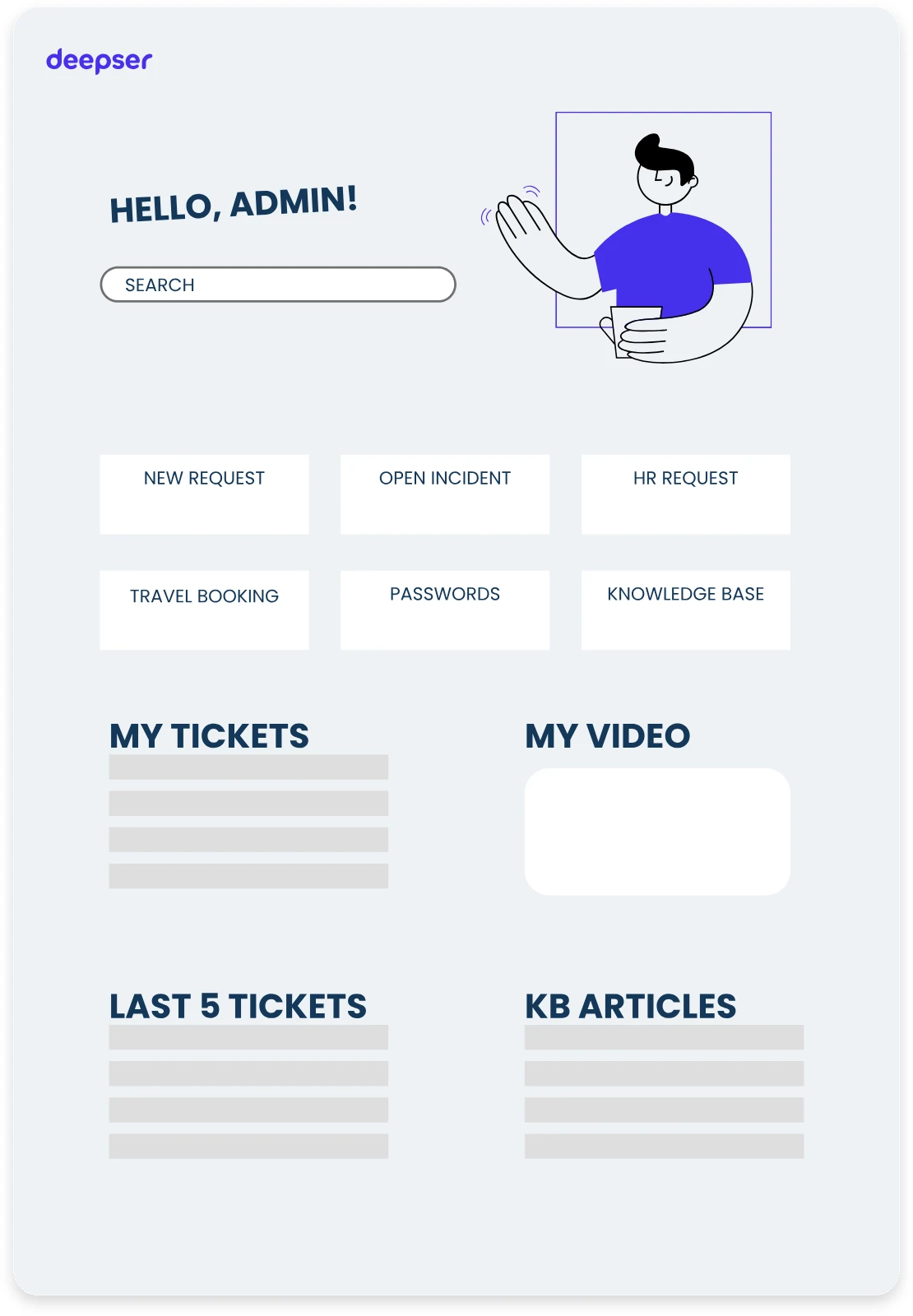
Graphical representation of Deepser's user portal

Conclusions

Implementing effective IT Services is a crucial factor in turning technology into an engine for growth and competitiveness. From IT security to business continuity, from ticket management to asset management, the opportunities to innovate and optimize costs are countless.

The opportunities to innovate and optimize costs are countless.

Start today to build an IT ecosystem that is robust, secure and aligned with your business goals. The benefits, in terms of productivity and savings, will not be long in coming.

Want to test the benefits of an integrated IT system in your company right away? Try Deepser’s free demo(credit card not required).


Try our free demo

Subscribe to our newsletter

Get the best content on ITSM software, customer service and processes in your inbox twice a month.

Summarize this article with AI

Access the recording

See Deepser in action

Work with us

Access the Resource

Complete the form to get immediate access.

Compare all features
Feature
Starter
Plus
Enterprise
Service & Ticketing
Service Management
Incident Management
Issue Management
Request Management
Problem Management
Change Management
Customizable Service Types
Help Desk
Manage Priority/Urgency
Manage Status
Multi-Level Customizable Categorization
Routing Rules
Request Assignment
Customizable Service Desk Queues
Reminders
Escalation Rules
Multichannel Communication
Email Ticketing
Unlimited Email Integrations
Automatic Email Notifications
Customizable Email Templates
Call Center Management
CTI Integration
Time Tracking
Worklog Activities & Reports
Internal Comments
Comments To Users
Pre-Defined Quick Replies And Macros/Templated Responses
Ticket Relationship Mapping
Custom Ticket Templates
Multiple Ticket Templates & Template Rules
Ticket Export
Task Automation
To Do List
Tasks For Maintenance Scheduling And Activity Planning
Visual Calendar And Progress
Split Activities To Multiple Users
Customizable Task Types
Customizable Task Templates And Fields
SLA
Multiple Service Level Agreements Policies
Custom Work Calendars
Custom Unlimited Metrics
Custom Unlimited Goals
Business Rules Management
Reminders And Notifications
Escalations For Sla Violation
Escalations To Prevent Sla Violation
Marketing
Conversions Management
Ads Campaigns Management
UTM Parameteres Tracking
Performance Monitoring
Advanced Collaboration
Changes Tracking
Sales
Catalog: Product Management
Catalog: Simple Products & Grouped Products
Catalog: Product Types and Visibility
Catalog: Related Products
Tax Management
Tax based on Country
Multiple taxes
Currency: Multiple Currency
Currency: Automatic Currency Rate Updates
Currency: Quotes & Orders with different currencies
Price List: Multiple Price List Management
Price List: Catalog Price List Rules & Priorities
Price Lists based on Account
Quotation Management
Quotation templates
Order Management
Order templates
Create Orders from Quotations
Invoice Management
Invoice templates
Create Invoice from Orders
Create Invoice from Tickets
Create Invoice from Products
Shipment Management
Shipment templates
Create Shipment from Orders
Calendar
Visual Calendars
Customizable Calendars Linked To Service, Cmdb, Crm, Tasks, Etc.
Integration with Microsoft 365 & Google Calendars
ITAM
IT Asset Manager With Auto-Discovery
Asset Lifecycle Management
Job Rules To Automatically Assign Assets To Companies/Users
Remote Collectors For Segregated Networks
Windows Agent
Agentless Discovery With Multiple Protocols
Monitoring
Software Manager: Auto-Detect Of Installed Software
Ip Address Manager With Subnets Auto-Discovery
Remote Control With Teamviewer
Remote Control With Anydesk
Remote Control With Splashtop
Integrations
Unlimited Ldap Integrations
LDAP Compliance With All Commercial Standards (Active Directory, Open Ldap, Etc.)
Import Users From LDAP
Import Groups From LDAP
Azure AD
SAML & OAuth2.0
SSO – Single Sign On
SSO Linked With Ldap Integration
Import – Powerful Native Tool
Import – Unlimited Customizable Imports
Export – Excel/Csv/Pdf Exports
Integration – Connector For External Integrations
API – Powerful Rest API
Open Source Library For Api Integration
Telephone Switchboards Via CTI
Dashboard
Real Time Html5 Dashboards
Dashboards Panels With Group Permissions
Unlimited Customizable Dashboards
Reports
Pre-Defined Reports
Unlimited Customizable Reports
Scheduled Email Reports
Grids
Massive Actions For Multiple Updates
Excel/Csv Export
Granular Visibility Permissions
Miscellaneous
Watchers Users
Multicompany
Multidepartment
Supervisor Users
Global Search On All Entities
Unlimited Custom Fields
Customizable Branding
Custom Fields For Every Entity: Ticket, Crm, Cmdb, Users, Companies, Itam, Etc.
Customizable Form Templates
Granular Visibility For Every Template Field
Customizable Template Rules
Custom Grids
Custom Grids: Easy Configuration With Drag&Drop Tool
Custom Events For Integrations Or Custom Processes
Multifactor Authentication
Multi Language
Flexible And Powerful Permission Management
Flexible User Groups
Customizable User Roles
System Lists With Advanced Permissions And Logic
Unlimited Customizable Lists With Advanced Permissions And Logic
Attachments For Document Storage
Unlimited Attachments With Drag&Drop Management
Attachment Types With Advanced Permissions For Visibility
Multiple Warehouse Management
Warehouse Loads and Unload
Warehouse: Tickets and Worklog integration
Portals
End User Portal
Self-Service Portal
User Registration With Customizable Signup Process
Guest Portal For Non-Registered Users
Cmdb Portal For End Users / Customers
Crm Portal For End Users/Customers
Cms For Guest Portal
Announcement: Type management
Announcement: ITSM Release Management
Announcement: Scheduling
Announcement: Visibility management & permissions
Announcement: Tag categorization and custom sorting
Announcement: Integration with Portal Designer
Chat
Internal Conversations
Internal Conversation Channels
End User Portal Chat
Conversation Channels With Multiple End Users / Customers
Web Widget
Branded Widget Published On Multiple Web Sites
Customization Of The Widget
Customizable Offline Module
Unlimited Simultaneous Chats
File Sending
Activity Hours
Board
Kanban With Entities Integration
Kanban With Free Forms
Contract
Integrated Worklogs
Purchase Orders Management
Suppliers Management
Contracts In Hours & Quantity
Contracts Workflows
CRM
Account Management (Customers, Providers, Suppliers, Partners, Etc.)
Contact Management (Leads, Prospects, Contacts, Etc.)
Opportunity Management
Customizable Opportunity Types
Linked With Service Management And Contracts
Sales Pipeline Management
Email Crm For Sales Opportunities And Contracts
Address management: Address type management (e.g. location address, billing, shipping, etc.)
Address management: Address association to Accounts, Offices, Warehouses and CMDB
Password Manager
Secure Password Manager With Double Key Encryption
Secure Password Manager Portal For End Users / Customers
Secure Password Manager With Corporate (Shared) Passwords
Secure Password Manager With Private Passwords
Audit Log For Passwords Security
Passwords Linked To All Entities Of The System
Password Manager: Automatic Generation
Password Manager: Strength Checker
Knowledge Base
Multiple Knowledge Bases
Kbs Visibility Based On Groups
Portal Kbs For End Users / Customers
Public Kbs For Non-Logged Users
Kb Linked To Tickets
Kb Linked To Cmdb / Itam
Kb Linked To Crm
CMDB
Unlimited Customizable Ci Object Types
Unlimited Cis
Relations Between Cis
Link With Tickets
Link With Crm And Contracts
Service Catalog Management
Contract Management
License Management
Locations
Link With Itam (Autodiscovery) Module
Planned Activities / Maintenance
Email Cmdb For Devices And Contracts
Graph view relations
Graph view layout & dynamic loading
Module Creator
Create Apps & Custom Modules
Create Custom Forms & Grids
Create End User Portal Custom Modules
Create Custom API
Survey
Customer Satisfaction Survey
Survey Form Visual Designer
Automatic Surveys
Realtime Dashboards
Periodic surveys
Project
Project Management
Auto-scheduling for tasks
Advanced Permissions
Project dependencies and constraints
Project milestones and deliverables
Flow
Approval Request Management
Management Of Approvals By Email
Management Of Approvals From User Portal
Approval Rules Management
Approval Stage Management
Management Of Scheduled Flows
Management Of Automatic Entity Creation
Management Of Automatic Entity Update
Scheduled Maintenance Management
Task Automation Management
Automatic Email Management
No Code / Low Code Platform
Portal Designer
Visual Portal Designer
Frontend Portal Visual Designer
Graphic Widget
Portal Page Management
Group Based Visibility Management
Graphic Widget Customization
Multiple Portals Management
Product Management
Development Task Prioritization
Bug and Fix Tracking
Product Issue Management
Product Backlog Management
Feature Requests Management
Changes Tracking
Task Assignment to Developers

How many agents are on your team?