Outsourcing was supposed to be the key to freeing up valuable resources within IT departments. Handing off the management of specific services to external partners seemed like the ideal way to finally allow internal teams to focus on innovation and business strategy.
However, operational reality often paints a different and unexpected picture.
IT managers soon realize that the hours saved on technical tasks are almost entirely consumed by the complexity of coordinating an ever-expanding network of providers. They end up spending more time chasing vendors and aligning disconnected processes than creating actual value for the business.
This paradox turns the theoretical advantage of delegation into a tangible management burden. This is precisely where Service Integration and Management (SIAM) steps in to resolve the fragmentation problem.
Below, we will explore how this methodology allows you to take back the reins of your IT ecosystem, transforming a chaotic mix of external parts into a single, unified service
The End of the ‘Single Vendor’ Era: Why SIAM is Essential Today
Until a few decades ago, IT management was relatively straightforward, often outsourced to a single large vendor that handled everything. Today, that model has all but vanished. Modern companies prefer a ‘best-of-breed’ approach—selecting the specific solution that best fits each individual need.
The Paradox of Choice: More Providers, Less Control?
This freedom of choice has resulted in a highly fragmented ecosystem. IT teams now find themselves juggling a cloud provider, a security vendor, mobile app developers, and connectivity partners all at once.
Each of these players works in a silo, focusing exclusively on their own piece of the puzzle. As a result, the internal IT department loses oversight and the ability to ensure these components work in harmony for the end user.
Beyond Simple Outsourcing: Defining Service Integration and Management
SIAM is a management methodology that applies a governance layer across your various providers. The goal is to ensure the organization no longer has to worry about the technical coordination of every single external partner, allowing them to focus instead on the value these services deliver to the business.
The Architecture of SIAM: Components and Roles
For this model to function effectively, roles must be clearly defined. Imagine SIAM as a three-tiered structure where each layer has specific responsibilities to avoid overlaps and gray areas.
The Customer (Retained Organization)
At the foundation is the client organization, which retains high-level strategy and governance. Even when operations are delegated, ultimate responsibility and business decision-making remain firmly in-house.
The Role of the Service Integrator
This is the key differentiator from past models. The Service Integrator acts as a logical middle layer that coordinates the various providers. Its job is to ensure that services are integrated end-to-end. The Integrator does not merely ‘push paper’; it actively manages performance by ensuring that various providers collaborate rather than competing with or ignoring one another.
Service Providers: Internal, External, and the ‘One Team’ Concept
Finally, there are the service providers, which can be either internal teams or external partners. In a mature SIAM model, these players stop working as isolated entities and start operating as one extended team, where the success of each provider depends on the performance of the entire chain.
The Three Operational Models of Integration
There is no ‘one-size-fits-all’ approach to SIAM; the choice depends heavily on organizational maturity and available resources.
1. Internal Service Integrator
In this scenario, the organization chooses to retain the integrator role in-house.
This ensures maximum strategic control and a deep understanding of business dynamics. However, it requires significant investment in staffing and specialized skills to manage the complex coordination involved.
2. External Service Integrator
Here, the coordination role is outsourced to a specialized third party.
This allows you to leverage the expertise of specialists who perform these tasks daily, freeing the internal team from operational burdens. The risk, however, is losing alignment with specific business needs if strong governance oversight is not maintained.
3. Hybrid Model
This is often the most balanced solution for modern businesses.
The organization retains select strategic integration functions internally while outsourcing the more operational and standardized activities. This offers a smart balance between direct control and operational flexibility.
Why organizations adopt SIAM
Adopting this framework is not a passing fad; it is a response to tangible business needs that traditional ITIL models struggled to fully address in multi-vendor environments.
Key Organizational Benefits of SIAM
The primary advantage lies in the ability to view the service through the user’s eyes, rather than as a collection of separate contracts. An integrated approach improves service quality by eliminating ‘finger-pointing’ and blame-shifting between providers.
It also drives greater cost efficiency. With strong central governance in place, the company can easily foster competition among suppliers for specific projects to get the best value.
Finally, it provides greater agility. Replacing an underperforming vendor becomes much easier when an integrator is there to manage the transition, ensuring there is no disruption to daily operations.
The Role of Technology in SIAM: Deepser as the Central Hub
Even a perfect organizational model is useless if the tools supporting it are fragmented. Companies often find themselves having to check a dozen different portals just to understand the health of their IT services.
This is where a flexible platform like Deepser becomes critical. It centralizes operations, replacing a disjointed array of vertical tools with a single, all-in-one solution.
Deepser acts as the backbone of the SIAM model, consolidating essential capabilities through an ever-expanding ecosystem of modules.
At its core is unified operations management. The platform seamlessly handles critical processes, such as Incident, Request, Problem, and Change Management, allowing tickets to be assigned and routed between internal and external teams without the user ever experiencing a break in service.”
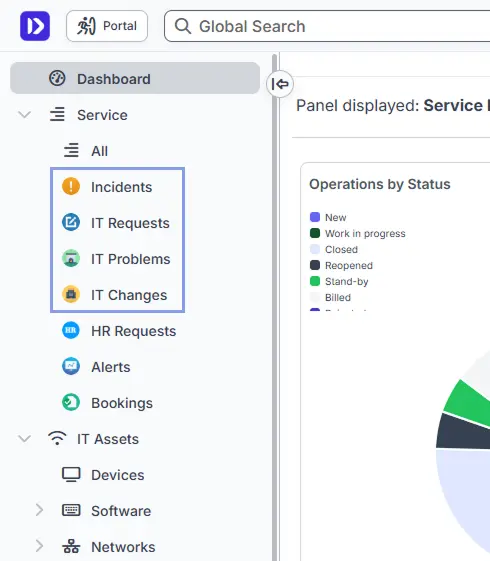
On the governance and transparency front, the audit trail within each ticket becomes indispensable. It establishes exactly ‘who did what,’ eliminating gray areas between providers and ensuring full traceability for audits.
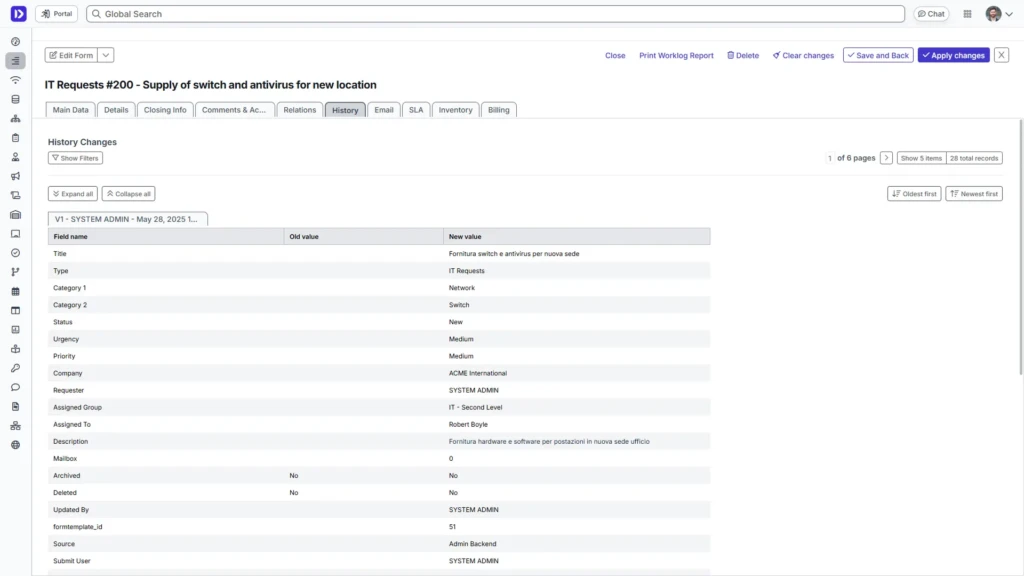
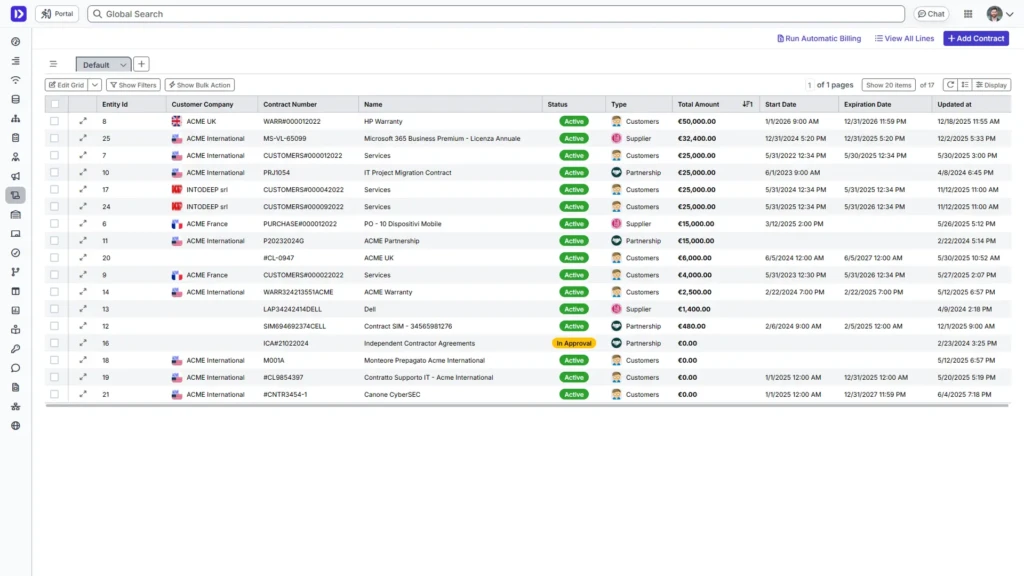
Another crucial aspect of a multi-vendor ecosystem is administrative oversight. Deepser includes contract management features to track deadlines, renewals, and SLAs, backed by advanced reporting that provides an objective view of actual vendor performance.
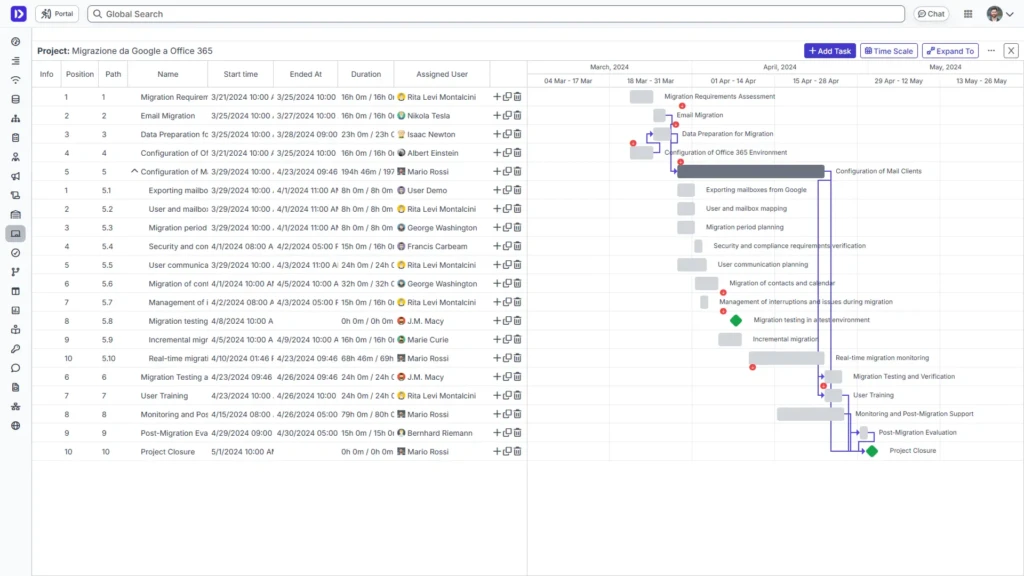
Finally, the platform closes the loop by supporting Project Management for strategic resource planning. Through Knowledge Management, it ensures the end user experiences a single, clear, and accessible service interface—regardless of which provider is actually delivering support behind the scenes.
How to Implement a SIAM Strategy Without Disrupting Operations
Many organizations hesitate to adopt SIAM, fearing that adding a new layer of governance will slow down existing processes. The secret is to avoid a ‘big bang’ approach and instead proceed in phases.
Step 1: Map Dependencies, Not Just Contracts
The most common mistake is to focus solely on legal aspects. Effective integration requires mapping data flows and operational dependencies.
Before rewriting SLAs, ask yourself: If Service A goes down, how does that impact Service Provider B? Understanding these interconnections is the first step toward building real governance.
Step 2: Define a ‘Light’ Level of Integration
You do not need to launch a fully integrated model immediately. Start by centralizing only Critical Incident management and the Service Desk, leaving Change Management or minor issues independent for the time being.
This allows teams to adapt to the new ‘One Team’ collaboration model without feeling bogged down by bureaucracy.
Conclusion
Adopting SIAM marks the turning point between being overwhelmed by multi-sourcing complexity and actually governing it. It is the essential strategy for transforming a fragmented network of suppliers into a strategic asset. It ensures that every piece of the IT puzzle works in synergy toward a common goal, eliminating the wasted energy of inefficient coordination.
Making this leap requires technology that acts as an enabler, not a bottleneck. In a market dominated by rigid, expensive software giants, Deepser stands out as a proudly Italian ITSM platform designed for maximum flexibility.
Our approach allows the tool to be modeled on your processes, not the other way around, ensuring drastically shorter go-live times than the market average. While other solutions take months or years to get up and running, Deepser allows you to regain control of your IT ecosystem in weeks, with close and responsive support.
Our approach allows the tool to be tailored to your processes, not the other way around, ensuring go-live times that are drastically shorter than the market average. While other solutions take months or years to deploy, Deepser empowers you to regain control of your IT ecosystem in weeks, backed by dedicated, responsive support.
Are you ready to centralize the governance of your IT services? Discover how Deepser can become the engine driving your SIAM model.