

Back
Back
Back
Blog

Complete Guide to IT Demand Management

In this article

Complete Guide to IT Demand Management

February 7, 2025

·

5 min read

Anna Acquasaliente

Anna Acquasaliente

Demand Management Graphic

Introduction

This guide will delve into the role of IT Demand Management in businesses, explaining how this discipline can help prevent inefficiencies, improve internal collaboration, and create value.

Whether you are facing rapid growth, managing an increasingly complex workload, or trying to optimize your IT department, this guide will provide practical insights and useful strategies.

What is IT Demand Management

IT Demand Management is the process by which an organization strategically and systematically identifies, evaluates, and manages requests for IT services.

This process includes demand planning, request prioritization, and resource allocation.

In addition, Demand Management is a crucial tool for preventing operational overloads and inefficiencies that can result in poor management of IT resources.

Origins and historical development

IT Demand Management has its roots in IT management frameworks such as ITIL (Information Technology Infrastructure Library), which provides guidelines to improve IT services efficiency.

Over time, this practice has evolved to include elements of governance, automation and predictive analytics, becoming essential for companies.

Today, demand management is seamlessly integrated with advanced data analytics and workflow management tools, empowering more informed and timely decision-making.

Differences between IT Demand Management and Project Management

While project management focuses on the execution of specific projects with defined goals and deadlines, Demand Management is a broader discipline concerned with understanding and managing the overall needs of the business. Demand Management looks at the big picture, ensuring that each IT request is evaluated and met according to its strategic priority, creating a balance between available resources and business objectives.

The importance of IT Demand Management in modern businesses

IT and Business Alignment

One of the main goals of IT Demand Management is to create a bridge between the IT department and the business. This alignment is crucial to ensure that technology resources effectively support business objectives. Without a clear link between IT and business, companies risk wasting resources on projects that do not add real value. Therefore, it allows business needs to be translated into concrete technology solutions, promoting better collaboration between departments.

Impact on competitiveness

Effective IT Demand Management enables companies to respond quickly to market demands, improving their competitiveness and ability to innovate. Companies that master IT Demand Management can implement new technologies quickly, maintaining a competitive advantage over competitors.

Deepser for IT Demand Management

If this topic aligns with your interests, Deepser might just be the perfect solution, try the demo to find out.

Deepser is an ITSM (IT Service Management) platform designed following ITIL best practices, with the goal of simplifying and improving IT request management.

The integrated user portal allows requests to be created in a clear and structured way, while the advanced ticketing system automatically organizes and assigns requests to the most appropriate team or person, optimizing resource allocation.
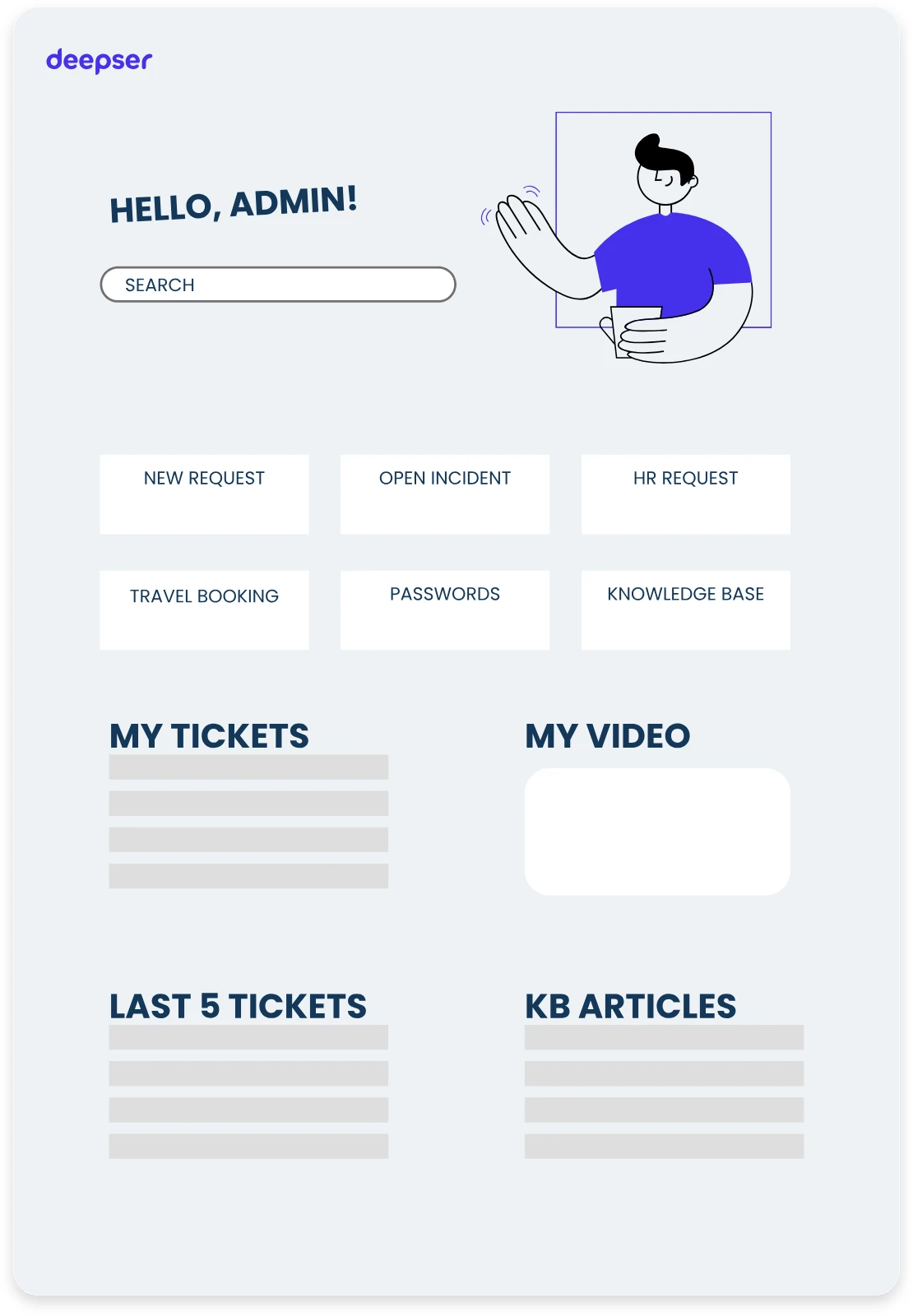
Graphics representing Deepser User Portal in the context of Demand Management

Deepser also integrates customized SLAs (Service Level Agreements), which provide an accurate overview of the time spent on each request. This makes it possible to monitor performance and ensure that business priorities are met.
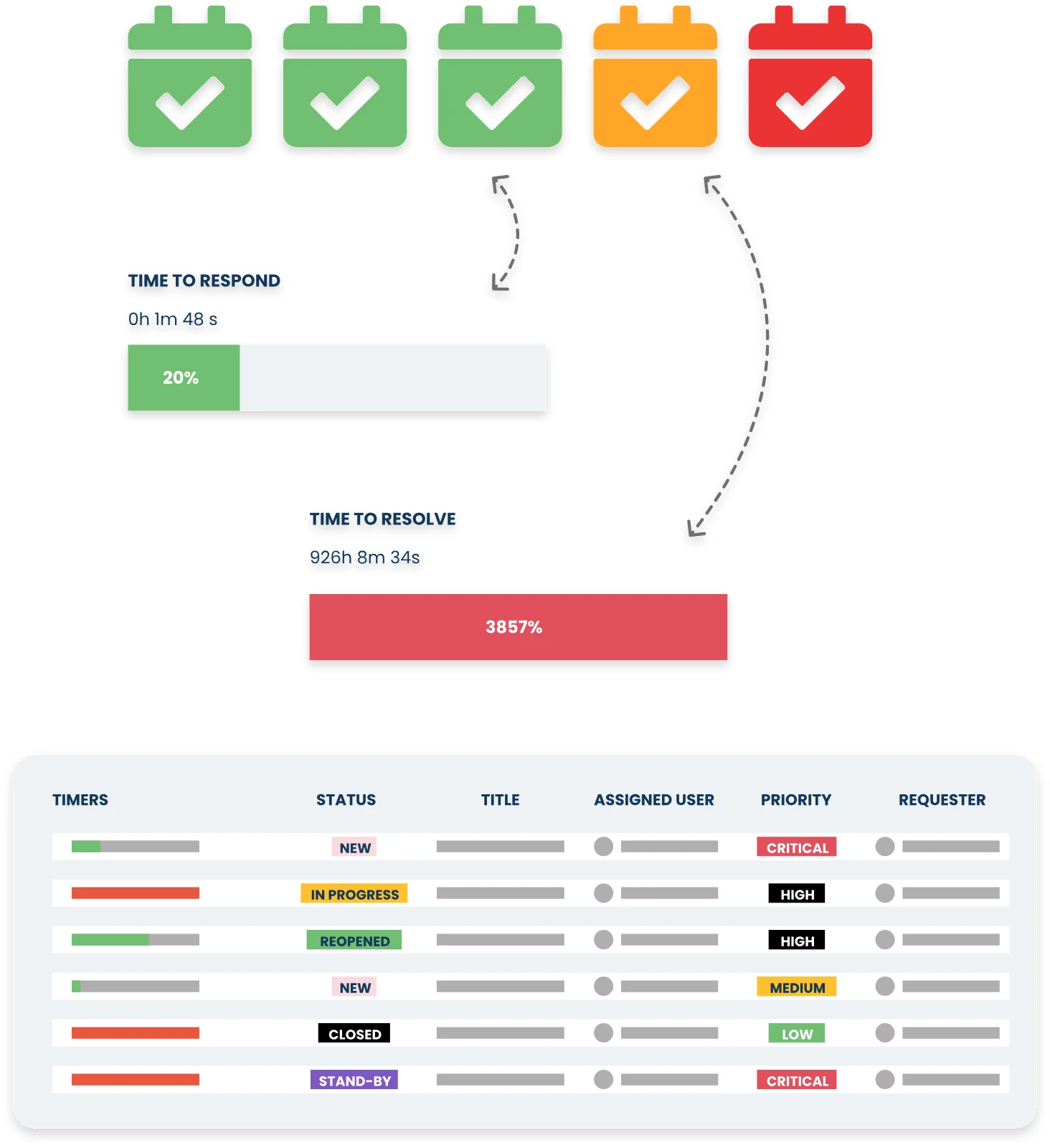
SLAs in Deepser for IT Demand Management

Through this structured approach, Deepser improves operational efficiency, increases end-user satisfaction, and promotes more strategic and proactive IT management.

Try our free demo

Key Components of IT Demand Management

Demand planning

A key element of Demand Management is the ability to forecast and plan for future demands, based on data analysis and market trends.

This process requires the use of advanced analysis tools that can identify patterns of use and anticipate future needs.

For example, monitoring the adoption of new technologies can help prepare for significant changes in demand.

Communication and request management

Effective communication between departments ensures that requests are properly understood, documented and evaluated. This includes establishing a centralized system to collect and track all requests, ensuring that there is no duplication or forgotten requests. A structured and transparent approach facilitates internal collaboration and allows each request to be addressed in a timely and effective way.

Needs Prioritization

Not all demands are of equal importance. Demand management helps determine which initiatives deserve immediate attention, based on criteria such as ROI, strategic impact, and urgency. An effective prioritization process can prevent delays in critical projects and ensure that resources are used where they bring the most value.

Portfolio Management Integration

An essential element is the integration with Portfolio Management, which aligns resource allocation with the overall business strategy. This cohesive approach provides a comprehensive perspective on business initiatives, enhancing risk management and optimizing resource utilization.

Demand Management Benefits

Improved operational efficiency

A well-structured process reduces redundancy and optimizes resource utilization, improving overall efficiency. Organizations that implement IT Demand Management can significantly reduce response times to requests, accelerating the execution of strategic projects.

IT resources Optimization

Demand management helps distribute resources optimally, reducing costs and improving productivity. This includes not only managing technical resources, but also IT staff, ensuring that each team member works on projects that maximize their impact.

Reduction in Operating Costs

By identifying and eliminating inefficiencies, companies can significantly reduce the costs associated with IT services. For example, by consolidating redundant infrastructure or automating repetitive processes, significant savings can be achieved without compromising service quality.

Increased stakeholder satisfaction

An effective management system increases transparency and ensures that stakeholder needs are met in a timely manner. The ability to demonstrate value through hard data improves trust and collaboration between IT and business.

Conclusion

IT Demand Management is a key pillar for companies that want to remain competitive in the digital age. By implementing effective strategies and following proven best practices such as ITIL, organizations can optimize their resources, improve operational efficiency and better meet business needs.

If you want to learn how Deepser can help your company optimize request management and improve IT processes. Try our free 14-day demo(credit card not required).


Try our free demo

Subscribe to our newsletter

Get the best content on ITSM software, customer service and processes in your inbox twice a month.

Summarize this article with AI

Access the recording

See Deepser in action

Work with us

Access the Resource

Complete the form to get immediate access.

Compare all features
Feature
Starter
Plus
Enterprise
Service & Ticketing
Service Management
Incident Management
Issue Management
Request Management
Problem Management
Change Management
Customizable Service Types
Help Desk
Manage Priority/Urgency
Manage Status
Multi-Level Customizable Categorization
Routing Rules
Request Assignment
Customizable Service Desk Queues
Reminders
Escalation Rules
Multichannel Communication
Email Ticketing
Unlimited Email Integrations
Automatic Email Notifications
Customizable Email Templates
Call Center Management
CTI Integration
Time Tracking
Worklog Activities & Reports
Internal Comments
Comments To Users
Pre-Defined Quick Replies And Macros/Templated Responses
Ticket Relationship Mapping
Custom Ticket Templates
Multiple Ticket Templates & Template Rules
Ticket Export
Task Automation
To Do List
Tasks For Maintenance Scheduling And Activity Planning
Visual Calendar And Progress
Split Activities To Multiple Users
Customizable Task Types
Customizable Task Templates And Fields
SLA
Multiple Service Level Agreements Policies
Custom Work Calendars
Custom Unlimited Metrics
Custom Unlimited Goals
Business Rules Management
Reminders And Notifications
Escalations For Sla Violation
Escalations To Prevent Sla Violation
Marketing
Conversions Management
Ads Campaigns Management
UTM Parameteres Tracking
Performance Monitoring
Advanced Collaboration
Changes Tracking
Sales
Catalog: Product Management
Catalog: Simple Products & Grouped Products
Catalog: Product Types and Visibility
Catalog: Related Products
Tax Management
Tax based on Country
Multiple taxes
Currency: Multiple Currency
Currency: Automatic Currency Rate Updates
Currency: Quotes & Orders with different currencies
Price List: Multiple Price List Management
Price List: Catalog Price List Rules & Priorities
Price Lists based on Account
Quotation Management
Quotation templates
Order Management
Order templates
Create Orders from Quotations
Invoice Management
Invoice templates
Create Invoice from Orders
Create Invoice from Tickets
Create Invoice from Products
Shipment Management
Shipment templates
Create Shipment from Orders
Calendar
Visual Calendars
Customizable Calendars Linked To Service, Cmdb, Crm, Tasks, Etc.
Integration with Microsoft 365 & Google Calendars
ITAM
IT Asset Manager With Auto-Discovery
Asset Lifecycle Management
Job Rules To Automatically Assign Assets To Companies/Users
Remote Collectors For Segregated Networks
Windows Agent
Agentless Discovery With Multiple Protocols
Monitoring
Software Manager: Auto-Detect Of Installed Software
Ip Address Manager With Subnets Auto-Discovery
Remote Control With Teamviewer
Remote Control With Anydesk
Remote Control With Splashtop
Integrations
Unlimited Ldap Integrations
LDAP Compliance With All Commercial Standards (Active Directory, Open Ldap, Etc.)
Import Users From LDAP
Import Groups From LDAP
Azure AD
SAML & OAuth2.0
SSO – Single Sign On
SSO Linked With Ldap Integration
Import – Powerful Native Tool
Import – Unlimited Customizable Imports
Export – Excel/Csv/Pdf Exports
Integration – Connector For External Integrations
API – Powerful Rest API
Open Source Library For Api Integration
Telephone Switchboards Via CTI
Dashboard
Real Time Html5 Dashboards
Dashboards Panels With Group Permissions
Unlimited Customizable Dashboards
Reports
Pre-Defined Reports
Unlimited Customizable Reports
Scheduled Email Reports
Grids
Massive Actions For Multiple Updates
Excel/Csv Export
Granular Visibility Permissions
Miscellaneous
Watchers Users
Multicompany
Multidepartment
Supervisor Users
Global Search On All Entities
Unlimited Custom Fields
Customizable Branding
Custom Fields For Every Entity: Ticket, Crm, Cmdb, Users, Companies, Itam, Etc.
Customizable Form Templates
Granular Visibility For Every Template Field
Customizable Template Rules
Custom Grids
Custom Grids: Easy Configuration With Drag&Drop Tool
Custom Events For Integrations Or Custom Processes
Multifactor Authentication
Multi Language
Flexible And Powerful Permission Management
Flexible User Groups
Customizable User Roles
System Lists With Advanced Permissions And Logic
Unlimited Customizable Lists With Advanced Permissions And Logic
Attachments For Document Storage
Unlimited Attachments With Drag&Drop Management
Attachment Types With Advanced Permissions For Visibility
Multiple Warehouse Management
Warehouse Loads and Unload
Warehouse: Tickets and Worklog integration
Portals
End User Portal
Self-Service Portal
User Registration With Customizable Signup Process
Guest Portal For Non-Registered Users
Cmdb Portal For End Users / Customers
Crm Portal For End Users/Customers
Cms For Guest Portal
Announcement: Type management
Announcement: ITSM Release Management
Announcement: Scheduling
Announcement: Visibility management & permissions
Announcement: Tag categorization and custom sorting
Announcement: Integration with Portal Designer
Chat
Internal Conversations
Internal Conversation Channels
End User Portal Chat
Conversation Channels With Multiple End Users / Customers
Web Widget
Branded Widget Published On Multiple Web Sites
Customization Of The Widget
Customizable Offline Module
Unlimited Simultaneous Chats
File Sending
Activity Hours
Board
Kanban With Entities Integration
Kanban With Free Forms
Contract
Integrated Worklogs
Purchase Orders Management
Suppliers Management
Contracts In Hours & Quantity
Contracts Workflows
CRM
Account Management (Customers, Providers, Suppliers, Partners, Etc.)
Contact Management (Leads, Prospects, Contacts, Etc.)
Opportunity Management
Customizable Opportunity Types
Linked With Service Management And Contracts
Sales Pipeline Management
Email Crm For Sales Opportunities And Contracts
Address management: Address type management (e.g. location address, billing, shipping, etc.)
Address management: Address association to Accounts, Offices, Warehouses and CMDB
Password Manager
Secure Password Manager With Double Key Encryption
Secure Password Manager Portal For End Users / Customers
Secure Password Manager With Corporate (Shared) Passwords
Secure Password Manager With Private Passwords
Audit Log For Passwords Security
Passwords Linked To All Entities Of The System
Password Manager: Automatic Generation
Password Manager: Strength Checker
Knowledge Base
Multiple Knowledge Bases
Kbs Visibility Based On Groups
Portal Kbs For End Users / Customers
Public Kbs For Non-Logged Users
Kb Linked To Tickets
Kb Linked To Cmdb / Itam
Kb Linked To Crm
CMDB
Unlimited Customizable Ci Object Types
Unlimited Cis
Relations Between Cis
Link With Tickets
Link With Crm And Contracts
Service Catalog Management
Contract Management
License Management
Locations
Link With Itam (Autodiscovery) Module
Planned Activities / Maintenance
Email Cmdb For Devices And Contracts
Graph view relations
Graph view layout & dynamic loading
Module Creator
Create Apps & Custom Modules
Create Custom Forms & Grids
Create End User Portal Custom Modules
Create Custom API
Survey
Customer Satisfaction Survey
Survey Form Visual Designer
Automatic Surveys
Realtime Dashboards
Periodic surveys
Project
Project Management
Auto-scheduling for tasks
Advanced Permissions
Project dependencies and constraints
Project milestones and deliverables
Flow
Approval Request Management
Management Of Approvals By Email
Management Of Approvals From User Portal
Approval Rules Management
Approval Stage Management
Management Of Scheduled Flows
Management Of Automatic Entity Creation
Management Of Automatic Entity Update
Scheduled Maintenance Management
Task Automation Management
Automatic Email Management
No Code / Low Code Platform
Portal Designer
Visual Portal Designer
Frontend Portal Visual Designer
Graphic Widget
Portal Page Management
Group Based Visibility Management
Graphic Widget Customization
Multiple Portals Management
Product Management
Development Task Prioritization
Bug and Fix Tracking
Product Issue Management
Product Backlog Management
Feature Requests Management
Changes Tracking
Task Assignment to Developers

How many agents are on your team?